📰 Družina · 90

 Slovenia
Rock'n'roll bandits, Pithee has completed the work of Red Bull
The first stage of the 32nd Rallye Slovenije, from Velengrad to Rogaska Slatina, concluded according to the wishes of the Red Bull - BORA - hansgrohe team, which took full control of the race. Jan Tratnik played a key role with his strong pace, breaking up the field and setting up the team's success. Laurence Pithie won the stage, with teammate Arne Marit finishing second and Edoardo Zambanini third. The best Slovenian driver was Tilen Finkšt, who finished seventh. Jakob Omrzal completed the stage in 25th place with the same time as the winner and main favorite, German Florian Lipowitz.
The Radiant Van
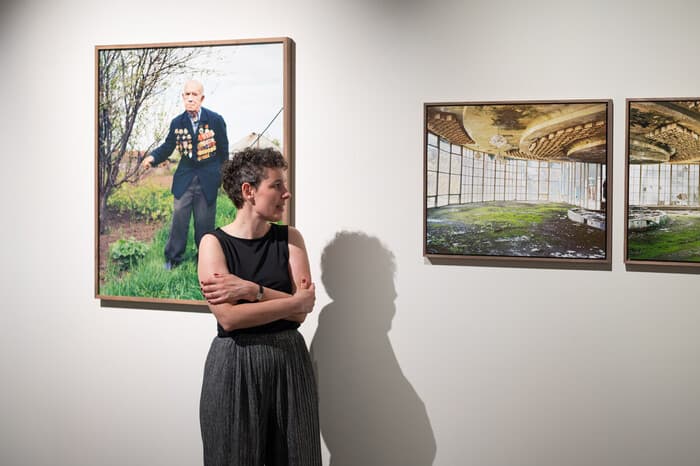
The article announces the release of 'The Radiant Van,' an art catalog produced as part of the international CANEMORTO project. It features work by three anonymous Italian artists known as Txakurra, presented through rich photographic documentation. The catalog was published by the Bologna-based publisher Bruno. The text includes contributions from curator Antonio Grulli, who provides insight into the artists and the broader CANEMORTO project. Jani Pirnat, curator of Gallery Vžigalica, situates the CANEMORTO exhibition within the gallery's program focused on contemporary painting. Matjaž Brulc

Food flows
The article discusses Slovenia's food trade flows with its main trading partners, highlighting the regional nature of the Slovenian food market based on strong mutual exchange of goods. It mentions that the top three positions in import and export categories are consistently occupied by the same four countries. The text also includes a quote from an unknown source: 'He who tills his land eats bread, he who chases empty words eats poverty.'

Self-Sufficiency Through the Ages
The article discusses self-sufficiency in food consumption in Slovenia, noting that the country is most self-sufficient in eggs and meat. It also mentions a decline in self-sufficiency for fruits, potatoes, and honey since the turn of the millennium, while it has increased for grains.

How much food do we eat?
The article presents data on average daily food consumption per capita and self-sufficiency levels in Slovenia. It includes information prepared by Andrej Viršček (data) and Katarina Šeme (design). The full text of the article is not accessible without subscription.

(PREJELI SMO) The elected representatives of the people in the National Assembly of the Republic of Slovenia, other responsible public office holders and the Slovenian public
The article discusses the re-submission of the Declaration on National Justice by the Society United at Lipi to the Tenth Session of the National Assembly of the Republic of Slovenia. The declaration emphasizes the need to restore honor and dignity to victims of interwar and wartime massacres, including the issuance of authentic death certificates and legal recognition of the revolution during World War II. It also expresses gratitude to former President Borut Pahor, human rights ombudsman Dr. Simona Drenik Bavdek, youth representatives of democratic parties, and leadership of new political er

24 Hours of Prayer and Fasting for the Fatherland Before National Day
The article reports on the annual 24-hour prayer and fasting event held before Slovenia's Independence Day, which this year marks the 35th anniversary of the country's independence. The event takes place from Monday, June 22, at 6:30 PM until Tuesday, June 23, at 6:30 PM. It includes online participation via YouTube and culminates with a live closing ceremony at Ljubljana Cathedral of St. Nicholas, featuring a prayer service followed by a traditional Mass for the homeland led by Slovenian bishops under the presidency of Archbishop Dr. Andrej Sajt. Representatives from society, politics, and外交使

On the quiet hillside beyond the Wall
The headline 'Po spokojnem gričevju onkraj Mure' translates to 'After a calm crossing beyond the Wall,' referring to the border between Slovenia and Croatia. No further details or context are provided in the article text.
The Bohinj Track a remarkable technical achievement of the early 20th century
The article discusses the Bohinjska proga, highlighting it as an exceptional technical achievement from the beginning of the 20th century.
Ancient Masterpieces
No body text available for analysis.
The Silent Conqueror
No body text available for analysis.

Is there any hope of a new Slovenian spring?
The article discusses Slovenia's current government under Janez Janša, noting it is the fourth Janša government and part of a broader pattern where only two previous governments have been considered democratic. The author highlights the short duration of these governments and the impact of historical factors like wartime losses and political migration under Tito. The current government is described as a minority coalition with a mix of Janša supporters and Christian Democrats who previously opposed Janša but now support his government. The article mentions the government's ability to govern st

On the trail of memory and hope
Students and teachers from a middle school led by principal Mark Bajuk commemorated the Day of Remembrance for Victims of Communist Violence in Buenos Aires. They visited the Museum of Immigration and the Conventillo Museum of artist Marjan Grum, learning about the history of Slovene immigrants in Argentina. The group also attended a prayer at the Church of Our Lady of Help before traveling to Buenos Aires. History professors Veronika Kremžar Rožanec and Monika Svetlin Pregelj provided insights into Slovene migration to Argentina, including those fleeing communist persecution after World War Ⅱ

Polona Avanzo Rediscovering the Value of Being Imperfect
The article discusses Polona Avanzo, highlighting her unique perspective on life, attention to detail, and her work with children through scouting activities. It also mentions her involvement in organizing the 'Moj košček Slovenije' competition since 2020. The text focuses on personal traits and professional experiences, emphasizing her curiosity and dynamic personality.

From Berlusconi to digital platforms RAI's role in Italian society
The article discusses the role of RAI, Italy's public broadcasting service, over the past 70 years, highlighting its historical significance as an educational institution during post-war reconstruction. It mentions RAI's monopoly before commercial television emerged and its influence in promoting literacy and uniting Italian society through programming such as 'Nikoli ni prepozno.' Experts like Paolo Poggio and Carlo Freccero are cited to emphasize RAI's impact on education and national identity.

When Doctors Give Up
The article appears to have incomplete text and contains placeholder content ('Lorem ipsum...') suggesting it was either not fully published or there was an error during loading. No substantive information about medical professionals or their experiences is provided.

In Maribor, Marcos Tavares will also celebrate life on Saturday.
The article reports on a 'March for Life' event taking place in Maribor on Saturday, June 20, which follows a similar event held in Koper earlier this month. The event supports the rights of unborn children and is organized by the Slovenian Marches for Life initiative. Former football player Marcos Tavares will attend the event. The organizers emphasize that life begins at conception and that all human beings deserve protection from conception until natural death. The article mentions that the events have faced opposition from left-wing activists and some self-proclaimed NGOs.

Parishioners at the dedication by Pastor Robbie: "You have been a mystery, a gift, and an encouragement to us"
The article discusses the passing of Father Robert Emeršič, who served as a priest in the parishes of Rače and Fram for 16 years. A heartfelt letter written by members of his community was shared, expressing gratitude for his service and describing him as a 'mystery, gift, and encouragement.' The text includes excerpts from the letter, which reflects on his impact on the community and offers prayers for his family.

Metka Furlan wrote the first book of the etymological dictionary of Slovenian zoonyms
The article discusses the publication of Dr. Metka Furlan's 'Etimološki slovar slovenskih zoonimov 1. A–M' by Založba ZRC. The dictionary contains etymological analyses of over 6,700 animal-related terms found in various literary, dialectal, and historical sources. It aims to explain the history, origin, and linguistic development of these terms, offering new insights into lexicography, lexicology, and comparative linguistics.

Nace Hladnik: In Idrija, the Slovene weekly Naprej was published by the Home Guard [5]
The article recounts a historical reenactment event organized by the Slovenian National Security Council (SNVZ), focusing on a military exercise involving partisans and SNVZ members during World War II. The text describes a simulated attack where SNVZ members surprised partisans, leading to their capture and subsequent deportation to Trieste. It also mentions intelligence gathered from captured equipment, including telephone lines used by the partisans for communication.

A Young Scottish Footballer Wins the Hearts of Fans With His Faith
The article highlights Ben Gannon-Doak, a young Scottish footballer who has become a symbol of courage, faith, and unity. It describes his role in Scotland's recent World Cup victory against Haiti and emphasizes his deep Catholic faith, particularly his devotion to St. Michael the Archangel. The piece notes how his genuine expression of joy during the match helped him gain global attention through social media.

Edward C. Malesic - pastor of the "Joyful Slovenes" in Cleveland
The article discusses Edward C. Malesic, the bishop of the Diocese with the largest number of American Slovenians, who visited Slovenia for the first time. The visit was officially linked to fundraising efforts for the Church in post-communist countries but also had personal significance for Malesic, who explored his ancestral roots in White Carniola. During the trip, he met relatives, visited locations such as Brezje, Maribor Archdiocese, and the A. M. Slomška Institute, and engaged in discussions with Slovenian bishops and theologians. Malesic also brought a donation from Sister Rajna Kosem,

The new book The Purpose of the Saw Legs Takes You Where Your Heart Is
The article discusses the presentation of a new book by Slovenian-Australian writer Cilka Žagar titled 'Noge te vodijo tja, kjer je tvoje srce,' published by the Tržaška založba Mladika in collaboration with Rafaelova družba. The event took place at Gallery Družina on June 17. The discussion involved several contributors including editor Marjeta Žebovec, priest Ciril Božič OFM, Ivo Jevnikar from Mladika magazine, and Lenart Rihar from Rafaelova družba. The article also provides background information on Cilka Žagar's life, including her birth in Dobrava ob Krki in 1939, her childhood during a

Canadian general: Putin's death is the first condition for peace
A former Canadian military commander, General Christopher Coates, stated during a recent visit to Ukraine that Vladimir Putin must die for a lasting peace in Ukraine. He emphasized that Putin's continued rule makes sustainable peace impossible and criticized the idea of achieving permanent peace through territorial concessions, calling it at best temporary. Coates also highlighted Russia's vulnerability in conducting an illegitimate war and noted the strategic importance of Ukrainian attacks on Russian oil and gas infrastructure.

Fully restored, Kosovo's homeland is alive again
The article discusses the full restoration of Kosovelova domačija (Kosovel House) in Tomaj, which has been reopened after extensive infrastructure and content renewal. The event was attended by many guests, including local officials and cultural figures. The restored house now serves as an open modern space for cultural, educational, and tourist activities, aiming to revive the creative spirit of the area. Details include the restoration of historical elements such as Srečkov's violin and Karmelin's piano.

A hundred years after his death, Foerster's music filled the cathedral in Ljubljana
A commemorative concert was held in Ljubljana's Cathedral of St. Nicholas to mark the 100th anniversary of the death of Anton Foerster, a significant figure in Slovenian church music. The event featured performances by the Mixed Choir Anton Foerster Ljubljana, under the direction of Damijana Božič-Močnik, with accompaniment from Gregor Klančič at the organ.

The oldest market girl in Maribor celebrated her 90th birthday
The article reports on the 90th birthday celebration of Vekoslava Škerbot, the oldest vendor at the Maribor market. The event took place with a festive atmosphere, attended by family members, friends, colleagues, and visitors. Mayor Saša Arsenovič also personally congratulated her. The article highlights her dedication, kindness, and long-standing presence at the market. Performances by the group Brači Malečnika and the Styrian Veterans' Association Ervina Hartman contributed to the celebratory mood.

World-renowned musician visits the pope in Madrid
During his visit to Spain, Pope Leo XIV met with internationally renowned Puerto Rican musician and Grammy winner Bad Bunny in Madrid. The Vatican confirmed the meeting, which took place at the beginning of the week. According to the Vatican's press representative, Bad Bunny requested the meeting and attended accompanied by family members and others. No photos from the meeting were released by the Vatican. It was noted that Bad Bunny appeared emotional during the encounter. During his visit to Spain, Bad Bunny also performed at several sold-out concerts in Madrid. Both events—Pope's meetings,

The history of early bloodletting in Slovenia (187541945)
The article discusses the early history of blood donation in Slovenia, beginning with the first successful blood transfusion performed by Dr. Franz Fux in 1875. It highlights the importance of safe blood donation practices, emphasizing the need for healthy donors and strict medical criteria. The text also notes the revival of blood donation efforts in 1927 and mentions the current system in Slovenia based on voluntary donations, anonymity, and free access.

The Devil and the Devils in Slovenia
The article discusses the historical term 'kruci,' which originally referred to participants in the Crusades but later came to denote rebels in the Kingdom of Hungary during the late 17th century. The term was used by Ottoman authorities to describe defectors and deserters who opposed Habsburg rule. These individuals were primarily ethnic Slovaks, Ruthenes (Ukrainians), Hungarians, and some nobles. The text also mentions the Counter-Reformation in Austria and Styria at the end of the 16th and beginning of the 17th centuries.
The introduction of 1100 characters
The article text appears to be composed of nonsensical Latin-like phrases and does not contain any coherent information or content. The headline 'Uvodnik 1100 znakov' suggests it was intended to be an introduction or lead paragraph of approximately 1100 characters, but no actual news content is present.

The nobles of the castle below the Chert, who were only short of a crown.
The article discusses the historical significance of the Žovneški family, an old noble dynasty from the area around Žovnek Castle in Slovenia. It describes their rise to power, their connections with European nobility, and their participation in major international events. The text also mentions their eventual decline, including the assassination of Ulrik II., the last male member of the family, in Belgrade in 1456. The article references poet Kajetan Kovič’s work 'Kalejdoskop,' which notes that the Žovneški family was only missing a crown to become a royal dynasty.

Papal Power: Why does Leo XIV wear a red cloak?
The article discusses Pope Leo XIV's decision to wear a red mozzetta, a garment previously unused by Pope Francis during his papacy. It highlights that this choice signifies a return to tradition, as previous popes wore the mozzetta during important events such as meetings with state leaders, Christmas addresses, and special liturgical services. The article provides historical background on the mozzetta and explains its symbolic significance within the Catholic Church.

Interview with Christopher West: God is not found by "those who are ready to come" but by those who are earnestly seeking him
The article discusses an interview with Christopher West, an American author and theologian known for his work on the theology of the body. The interview, conducted by Družina in collaboration with the organization Družina in Življenje, focused on West's personal experiences, including his struggles, relationships, and spiritual journey. He spoke about how God communicates through music and movies, and shared insights into his life and mission.

Monald Koprski oldest known graduated lawyer (canonist) from Slovenia
The article discusses Monald Koprski, a medieval canon lawyer, theologian, and Franciscan friar from what is now Slovenia. It highlights his contributions to church law, theology, and spiritual life in the Istrian and broader coastal regions during the Middle Ages. Born around 1210 in Koper or Parenzo, he studied law in Padua and combined his legal career with religious service. His most important work, 'Summa de iure canonico,' is noted as one of the most comprehensive medieval legal treatises. Despite never being officially declared a saint, he has gained widespread reverence among the local

The Power of Compassion
The article discusses Drago Jančar's reflections on the challenges facing Slovenian society, particularly regarding historical consciousness and empathy towards past suffering. It raises questions about the nature of national identity, the legacy of World War II, and the persistence of divisions within Slovenian society.

Inscribed on the List of Saints
The article discusses a small brochure published in 1985 in Buenos Aires titled 'Tudi slovenski mučenci moraju biti vpisani v seznam svetnikov' ('Even Slovenian martyrs must be enrolled in the list of saints'). The brochure contains eight articles written by Dr. Franc Blatnik, a Slovenian Salesian priest, originally published in 'Ameriška domovina' twenty years prior. These articles were selected and compiled by Dr. Filip Žakelj, another priest, who chose texts that encourage prayer and work for the honor of those who suffered under the communist revolution in Slovenia, with claims that their殉

Nace Hladnik: Home Defense in the Idrijski Coast [1]
The article discusses Nace Hladnik's account of the activities of coastal Slovene Home Guard units in the Idrija area during World War II, referencing his 1961 publication in the journal Vestnik. It also mentions Aleš Nose's book on the anti-communist units operating in Slovenia between 1942 and 1945, highlighting the role of the anti-communist leadership in Ljubljana and General Leon Rupnik in establishing the Home Guard in the Primorska region. The text notes the lack of local support for the organization due to fear of partisans and communist ideology.

A Piran evening dedicated to Gaudí, with Bishop Bizjak and Father Baji
A literary evening dedicated to architect Antoni Gaudí was held in Piran, featuring retired Bishop Jurij Bizjak and priest Zorko Bajc. The event, organized by publishing house Družina, focused on Gaudí's work and spiritual significance, particularly his masterpiece Sagrada Família. Attendees listened to music performed by Teo Collori and viewed footage of Pope Francis visiting the cathedral. Discussions centered on Gaudí's deep faith and his view of art as collaboration with divine creation.

[Video] Whose hand is reaching for Pigeon's wallet?
The article discusses Robert Golob's recent video where he criticizes the new government and spreads misinformation about a proposed law on parliamentary investigation. It mentions his attempt to involve Tina Gaber or another figure in the video, which portrays him trying to prevent anyone from searching through his phone, computer, or wallet. The article critiques Golob's approach as comical and ineffective, suggesting his propaganda efforts are similar to his leadership style. It also references the expansion of police and FURSA powers under the new government, citing the 'Šuštar Law' as a理由

Archbishop Zora in Brezje to the goldsmith: You were God's fruitful garden
The article reports on the ordination ceremony of new priests at Brezje, where they expressed gratitude to the Virgin Mary. Bishop Stanislav Zore addressed the newly ordained priests, acknowledging their spiritual commitment and expressing appreciation for their dedication to the priesthood. He reflected on the growth of the clergy over the years and emphasized the ongoing importance of their service.

Young beekeeper Karin Glazer: We could learn from bees about connectivity
The article profiles Karin Glazer, a young beekeeper in Trčova near Malečnik, who continues her family's farming tradition with innovation. It highlights her connection to nature, family, perseverance, and original ideas, emphasizing the peaceful rural setting and the view from her farm over the Pohorje mountains, Maribor, and the Drava Valley. The farm was passed down to her by her grandmother and has evolved over time with the addition of fruit trees and vegetable cultivation.

Slovenian charity donates more than EUR 100 000 in first aid to victims of storms
Slovenska Karitas has allocated over 100,000 euros in emergency aid to families affected by recent floods in Slovenia. The organization has visited several impacted areas, including Komenda, Cerklje na Gorenjskem, Žeta, and Halož, and processed 172 requests from households. Of these, 114 homes suffered severe damage, including destroyed roofs and attics, while 58 had flooded basements, damaged doors, and broken windows. The funds will be distributed to affected families in the coming days. Karitas plans to continue fundraising for the second phase of recovery efforts, focusing on the most受损的家庭

When the churches come alive with music, the 18th Vrana summer evenings begin.
The 18th edition of the Vranski Summer Evenings will begin on June 20 with a concert featuring baritone Lucas Somoza Osterc and guitarist Žarko Ignjatović performing Franz Schubert's 'Lepa mlinarica' at the Church of St. Mary Magdalene in Ločica. The event will continue with three more concerts in July, including performances by the Cédez string quartet and harpist Urška Križnik Zupan.

Young athletes can learn a lot from Jacob Fake
The article discusses Armin Auchentaller, the new head coach of the Slovenian biathlon team, and his initial impressions after arriving in Slovenia. It mentions his background in Italian biathlon and his collaboration with Slovenian officials Tomas Globočnik and Janez Ožbolt. The article highlights the team's preparations for the upcoming season under Auchentaller's leadership.
Burial and restoration in the heart of Slovenia
The article discusses the historical and spiritual challenges faced by Slovenia, drawing parallels between past oppression and the construction of a democratic society. It references religious themes, including the idea of building a 'city where God and humanity coexist,' and touches on events around May 31, 1945, during World War II.

Islam and Cultural Marxism
The article discusses the relationship between Christianity and Islam, referencing historical tensions and modern concerns about Islamic radicalization. It mentions the influence of Marxism, particularly cultural Marxism, on the spread of Islam in Europe and its perceived threat to the Catholic Church. The author suggests that understanding the Quran and Hadith, along with promoting Christian faith, could counteract this influence. The text also highlights cooperation among Muslim religious leaders in Slovenia in defending religious freedom and natural law.
At the booth
The author reflects on an encounter with two young girls who showed great interest in philosophical, theological, and other 'serious' book titles. The conversation turned into a discussion about topics such as gender identity, women's positions, perceived male value, the necessity of sexual relationships, critical thinking, human nature, stereotypes, societal pressures, and the boundaries that protect individuals from falling into complete relativism.
Cherries and pumpkins
The article discusses the author's experience with cherries and plums during the current season, sharing various recipes they have tried, such as cherry-filled pastries, almond cherry cake, and plum-based dishes. The author mentions enjoying the fruits and experimenting with different flavors and ingredients.

A Butterfly at the Edge of the Forest
The article describes the author's childhood experiences observing black moths (Amata phegea) in the forests of Ljubljana. It details their flight patterns, mating behavior, and appearance, noting that they are commonly seen by forest enthusiasts and workers.

Thyroid and natural support
The article discusses the thyroid gland, an endocrine gland responsible for producing hormones that regulate metabolism, body temperature, heart function, and muscle activity. It explains the importance of balanced thyroid function, describing symptoms associated with both underactive and overactive thyroid conditions. The text also highlights the role of nutrition, exercise, sleep, and stress reduction in maintaining thyroid health, along with specific nutrients like iodine, selenium, and zinc. Traditional herbal remedies are mentioned for managing thyroid-related issues.

Cherries and pumpkins
The article provides two recipes: one for a green vegetable fritter made with eggs, flour, baking powder, milk, salt, nutmeg, grated cheese, grated turnips, and blanched vegetables, and another for cherry pie with cardamom, including ingredients like cherries, sugar, cornstarch, almonds, rum, vanilla, and instructions for preparation.

BENEDICT Meeting of the parish staff of the deanery of Lenarsk
A meeting took place in Benedikt on Tuesday, June 2, involving the Parish Council (ŽPS) and all parish workers of the St. Leonard deanery in the Slovenian Mountains. The event was opened by local priest Marjan Role and Mayor Milan Repič of the municipality of Benedikt. The main part of the meeting was led by Marjan Lampret, pastor of the Trata-Gorenja Vas parish, who has 36 years of experience in pastoral work and has been involved in merging parishes. He shared insights based on his experience regarding what parish mergers mean, practical implications of merged parishes, and how to manage all

NAKLO Praying for Peace in a Body Procession
On the feast day of the Holy Body and Blood, a procession took place in Naklo parish following evening mass. The procession included the Most Blessed and traveled through the village and fields. Participants prayed for peace at home and around the world, asking God to protect them from illness, hunger, envy, and other hardships. The procession stopped at four landmarks: Mary's statue in the parish park, and the chapels of Zgúbova, Jágoščeva, and Težíčova. At each site, priest Ivan Jagodic blessed the crowd from all four directions of the sky. Children shook flowers at all the sites.

After the evening mass, the annual procession of the body
On Thursday, June 4th, a traditional telov processional took place after evening mass in the parish of St. Peter in Gornja Radgona, commemorating the feast day of the Holy Body. Such processions were mainly banned during communism but previously led towards the Radgona castle. Four prayers and petitions were held at four altars, each prepared by different groups of local parishioners.

The blessing of the banner of the faithful from Strehovce
On the eve of the feast day of the Holy Body and Blood of Christ, June 3rd, a solemn academic event titled 'Do this in my memory' was held at the parish church in Bogojina. The event celebrated the inclusion of the Bogojina procession into the intangible cultural heritage register. During the ceremony, the banner of the village of Strehovci was blessed. The banner features images of Saint Joseph and Saint Vid, patrons of the chapels located in Strehovci. Priest Dejan Horvat from Markovci and Gornji Petrovci in Gorica was present among others.

OLYMPIA Blessing of cyclists and bicycles
The municipality of Podčetrtek has an extensive network of cycling paths. In early June, these paths brought many cyclists to Olimje for a blessing ceremony. The event was organized by the tourist center Visit Podčetrtek. Mayor Peter Misja spoke at the gathering before the monastery of Olimje. Cyclists and their bicycles were blessed by Father Jože Lampret and Brother Jože from the Olimje monastery. After the blessing, cyclists continued their gathering at a nearby parking area where a meal was prepared for them.

Celebrating the anniversary of their marriage
The article reports on the celebration of anniversaries of married couples in the parish of Sv. Marko Niž. The event took place during the first week after the feast of St. Birgitta and included a Mass with prayers, gratitude, and requests for the couples. Nineteen married pairs attended, including some celebrating their 60th anniversary. The local priest, Janez Maučec, presented awards to the couples and invited them to an agape meal at the parish premises.

Home Care of the Sick
A free course titled 'Home Care for Patients' was held in April at the new facilities of the educational institution Hotič. Eighteen participants from Hotič and Kresnice attended, ranging in age and life experience, with the youngest being fifteen years old. This was the second time the course was offered in the municipality of Litija, organized by the parish charity in Kresnice and funded by the Archdiocesan Charity in Ljubljana. The course is part of a project by the Ministry of Public Administration called 'Connected in Self-Help Communities.' It was led by Antonija Fink, a retired trainedn

Romance of the Caritas associates
The article describes a visit by employees of the Caritas organization to the rural area of Idrijsko-Cerkljansko hribovje, including a tour of the region led by Jožef Poje and a visit to the parish of Šebrelje, where they were introduced to the local priest Andrej Penko. The group also visited the church of St. John and observed well-maintained agricultural land.

JALNA Parish pastoral day
The article reports on the 14th annual parish day celebrated in Žalna on the Sunday of the Holy Trinity. The event included Mass, remembrance of retired priests, congratulations to married couples who renewed their vows, and a spiritual program featuring songs and speeches highlighting events from the past year in the parish. The program also included activities for youth, commemorations related to Pope John Paul II's visit to Slovenia 30 years ago, and the 800th anniversary of Saint Francis of Assisi's death. Parish priest Andrej Šink thanked many members of the community for their work and奉献

Burma and the Blessing of the Cross
The article reports on a religious ceremony held in the parish of Šentjošt, Slovenia, celebrating the saints' birms (baptisms) and the blessing of a newly restored cross placed on the northern exterior wall of the church of Saint John the Evangelist. The ceremony was led by Archbishop Emeritus Stanislav Hočevar, who baptized nine individuals. The article mentions that the cross was restored by the restoration company Kavčič from Šentjošt nad Horjulom, though details about its original creation date and author remain unknown.

CONVERSATION Award of the prize to Anita and Stan Mihelic
Anica and Stane Mihelič from Podbrezje received an award from the Ljubljana archdiocese for their long-term work in the parish of Podbrezje. They continue to be active in the parish despite living in a senior citizens' home in Naklo for several months. Both were longtime singers, readers, members of the parish community, and participated in meetings related to Slovenian missionary candidates. They are well-acquainted with the history of Podbrezje, people's stories, and life in the parish. Anica was a member of the Parish Council, decorated the church, and volunteered at a nursing home. Stane,a

Goddess The Pilgrim's Laundry with Mary
In Filovci, a celebration of Mary, Helper of Christians, was held on Sunday, May 31st, marking the end of the annual pilgrimage season. A large number of pilgrims participated, and Zinka Lenarčič, who has been involved with them for many years, surprised everyone by giving them an image of Mary as a reminder of her month.

The memory of Ivan Jerich
A commemorative ceremony was held in Dokležovje on Saturday, May 30, honoring Ivan Jerič (1891–1975), a priest, editor of the Prekmurje newspaper, member of parliament, general vicar for Prekmurje, and a fighter for the region's autonomy. The event took place in his hometown of Beltinci, which is part of the Prekmurje area. Attendees included local clergy and officials who paid tribute to Jerič's loyalty to his people, the Church, and his homeland during the most difficult decades of the 20th century. A wreath was laid at a statue of Jerič located in front of the parish church of Saint Stephen

The nervous and forgetful heroes: Homo sovieticus slovenicus adventures of the Soviet Slovene in Titovina, part 7.
The article discusses the psychological trauma experienced by partisans during World War II, focusing on the phenomenon known as 'jurišniki'—a form of trance-like state where partisans would appear to fight enemies without causing harm to others or themselves. It references historical research by Hugo Klein and mentions the broader impact of psychological damage on individuals who were members of the Communist Party before the war.

The following table shows the number of manuscripts in the manuscript.
The article describes the author's first visit to the manuscript reading room at the National and University Library (NUK) in Ljubljana, highlighting the peaceful atmosphere and the availability of resources related to medieval manuscripts. It mentions Prof. Nataša Golob's research on medieval manuscript fragments, her publications, and an exhibition titled 'Lost with Time' showcasing these fragments. The article also notes the release of a book explaining what manuscript fragments are and their significance.

Keeping Humanity
The article discusses Pope Leo XIV's encyclical titled 'Magnifica Humanitas' (The Splendor of Humanity), which explores the implications of artificial intelligence (AI) on human dignity and ethics. The encyclical emphasizes that while AI can be a valuable tool, it must be used with care and moral awareness. It raises questions about the role of AI in decision-making, particularly in areas such as healthcare, where choices about who receives treatment may arise. The document also highlights the intrinsic value of every human being, regardless of their social status, and calls for both empirical

The Third World will be a long chapter for itself.
The article discusses Slovenia's deep integration into global trade, highlighting how everyday products in supermarkets come from complex international supply chains. It notes that over two-thirds of Slovenia's GDP comes from foreign trade, making the country highly dependent on global markets. The piece also touches on the vulnerabilities exposed by global disruptions such as energy price fluctuations, chip shortages, and the Suez Canal blockage, which have had direct impacts on Slovenia's economy and daily life.

A city on a hill cannot hide
The article discusses the significance of July 4th, the American Independence Day, focusing on the Declaration of Independence adopted by the Second Continental Congress in 1776. It highlights the document's ethical and ideological importance, emphasizing its unique approach compared to later movements like the French Revolution. The text explains that while the war began earlier with battles at Lexington and Concord, the choice of July 4th was made because it marked the adoption of the declaration, authored by Thomas Jefferson and John Adams, which outlined 23 reasons for independence.

Humanity
The author reflects on personal experiences with unexpected encounters and insights, particularly during travel and at events like the Paris Book Market. They describe their observations of the event, contrasting it with the Slovenian Book Fair, and discuss the nature of intellectual property rights in publishing.

Travel of Slovenian yogurt to the consumer
The article discusses the complex global supply chain involved in bringing a single Slovenian yogurt container to consumers. It highlights the interconnectedness of various international industries, including mining in Western Africa, oil tankers in the Middle East, Austrian cellulose producers, German machinery industry, and Slovenian ports. The piece emphasizes how seemingly simple daily actions, like purchasing yogurt, are deeply embedded in global economic and geopolitical dynamics.

Self-Sufficiency in a Globalised World
The article discusses Slovenia's food self-sufficiency and its position within the broader European and global economic context. It explains what food self-sufficiency means, noting that it refers to a country's ability to produce enough food to meet domestic needs. The article highlights that while Slovenia is generally dependent on food imports, food self-sufficiency is crucial during crises such as border closures, trade restrictions, or natural disasters. It also mentions that Slovenia has long struggled with insufficient pork production.

The sacred space is a resonant vessel of ritual
The article discusses Dr. Leon Debevec, an architect and theorist specializing in sacred space. It explores the concept of sacred space through both broad and narrow definitions, emphasizing its spiritual and transcendental significance. The text highlights Debevec's academic work at the Faculty of Architecture in Ljubljana and his focus on ancient and Christian sacred architecture.

How much can a government be new and different?
The article discusses the nature of politics as a mechanism of reproduction within capitalism, emphasizing the need for continuous progress in the concentration of capital. It critiques the political competition as a race between parties or groups seeking to advance this goal. The text also comments on the perception of political leaders, suggesting that those who are more cunning or dishonest often succeed. It notes that evaluating the results of governance is subjective and often based on feelings rather than objective measures.

Smart at the Slovenian Builder: First Holy Communion, Holy Trinity Sunday, the parish of Smyrna
The article discusses two significant religious events in the parish of Šmartno pri Slovenj Gradcu: the first holy confirmation ceremony and the traditional parish day celebrating the Feast of the Holy Trinity. During the Mass, Gusti Raščan spoke about the mystery of the Holy Trinity, emphasizing God's love and mercy. The first confirmation ceremony included a letter written by the confirmands to Jesus, expressing their gratitude and highlighting his teachings on kindness, mutual support, and forgiveness. Father Franc Linasi also addressed the confirmands, sharing his observations and guidance

People want to be part of a more friendly way of life
The article discusses the idea that modern secular society is shaped by theological perspectives, challenging the notion that secularism is a neutral framework separate from religious interpretations. It references philosopher John Milbank's work 'Theology and Social Theory,' which argues that secularism is not an objective baseline but rather a specific theological position. The text explores how contemporary social structures, politics, and culture are influenced by these underlying beliefs.

The first world Marian Eucharistic procession was successful. Will you join us next time?
On the feast day of the Immaculate Heart of Mary, the first worldwide Marian Eucharistic procession took place simultaneously across all continents, with over 6,000 people gathering in Derry, Northern Ireland. The event connected more than 550 parishes and 15 significant Marian shrines globally, including sites like Knock in Ireland, Fatima in Portugal, Lourdes in France, and others. Organizers hope Slovenia might participate in future events.

At the end of the academic year: "I learned to trust that I can't control everything".
As the academic year comes to an end, students gathered at the cathedral in Maribor for a thanksgiving mass. The event reflected on the past year and offered encouragement for upcoming exams. Juret Senekovič, a student of history and theology, shared insights on personal growth, new understandings, and deepening faith. Father Primož Lorbek emphasized the importance of prayer in students' work, while Archbishop Alojzij Cvikl spoke about faith growing through community rather than individualism, referencing biblical teachings.

Juhant na Lipa Reconciliation: When we bury the dead together and celebrate the seventh anniversary, Slovenia will rise to new life
The article discusses a traditional commemorative ceremony held by the group 'Združeni ob Lipi sprave' on the Day of Remembrance, Forgiveness, and Reconciliation. A wreath was laid at the memorial site for victims of wartime violence, and a prayer was led by Auxiliary Bishop Franc Šuštar. Prof. Dr. Janez Juhant, president of the organization, spoke about the recently adopted law regarding hidden war graves and the burial of victims. He emphasized the importance of truth, remembering the fate of loved ones, and dignified treatment of remains. Juhant also criticized the lack of proper death cert
The concept of the enemy or the concept of the neighbor?
The article discusses the concept of an enemy in society, arguing that it is used by ideologies like communism to justify oppression and elimination of those deemed different. It references historical examples such as Lenin and Stalin's purges and mentions the book 'Imperija' by Ryszard Kapuściński to illustrate how systematically enemies were identified and removed. The author critiques the idea of categorizing people into groups based on identity, class, or other factors, suggesting this leads to injustice.

Morality
The article discusses the relationship between morality and law, referencing Roman historian Cornelius Tacitus' observation that corrupt societies often have many laws. It argues that when morality becomes focused on social goals and historical justice rather than personal integrity, it loses its true meaning and becomes a tool for social criticism.

Does globalization have a home?
The article reflects on Slovenia's journey since independence, questioning what 'home' truly means in an increasingly globalized world. It explores the concept of home beyond physical structures, emphasizing identity, belonging, relationships, memory, and security. The piece draws on sociological research, referencing British sociologist Shelley Mallett's findings on how people associate home with emotional and social dimensions rather than just material aspects.

A popular scientist and podcast honest about God and faith [VIDEO]
The article discusses American neuroscientist Andrew Huberman, who hosts the popular podcast 'Huberman Lab.' After turning 50, he has become more open about his personal beliefs regarding God, stating that he once resisted the idea of God for a long time. In a recent conversation with podcaster Chris Williamson, Huberman spoke honestly about how he tried to suppress an inner voice telling him, 'I think God exists... It would be good if you prayed.' Eventually, he stopped resisting and opened himself to faith and prayer, experiencing a deep and lasting peace. He now feels everything is as it is

When, if not now: example of fixed language units
The article discusses linguistic units known as 'konstrukcije' (constructions), which consist of fixed parts combined with variable elements. It uses the example 'kdaj, če ne zdaj' (when, if not now) to illustrate how certain word combinations have established meanings. The text explains that these constructions require specific words at particular positions to convey predictable meaning, and it highlights the structure of this particular phrase.

Many overlooked papal appeals to migrants: learn a language and learn the customs of host countries
The Pope visited Tenerife, a key entry point for thousands of undocumented migrants seeking a better future in Europe. During his visit, he called for humane treatment of migrants and emphasized respect for host countries' customs and languages. He criticized smugglers who exploit people's lives, including women and children fleeing war and poverty, and condemned the growing normalization of the Mediterranean and Atlantic as unmarked graves.

Is Slovenian minority a plus or a minus?
The article discusses whether Slovenia's small market size and language make it impossible for its culture to survive without subsidies. It notes widespread agreement across the political spectrum that cultural sectors like publishing require public funding. The author questions if this small size is truly a justification for such a system and suggests it might instead demand more careful consideration of how these systems function and their effects. The piece also references comparisons with Vienna, suggesting that what is possible there may not be feasible in Slovenia due to different legal,

Catholic priests as martyrs of totalitarian regimes are counted among the blessed
In June of this year, several Catholic clergy members were declared blessed for their martyrdom under totalitarian regimes. Jan Bula and Václav Drbola were recognized as martyrs of communism in Czechoslovakia, while Jan Świerc and his companions were declared blessed as victims of Nazism in Poland. The declarations took place during religious ceremonies in Brno and Krakow. Pope Leo XIV mentioned the new blessed during Sunday prayers, noting they were declared blessed as martyrs due to their faithfulness to Christ and persecution by totalitarian regimes.

Nace Kladnik: Singing by Slovenian nationalists on the market streets [2]
The article discusses the activities of Slovenian home guards (domobranci) during World War II, focusing on their movements and operations in the Istrian region. It mentions their first joint march with the Slovenian National Defense Corps (SNVZ), their formation of a unit, and their subsequent mobilization efforts in the Ajdovščina area. The text also references encounters with partisans and challenges in organizing resistance.

Question to the Bishop: When and why did the complete pardon come into effect?
The article addresses a reader's question about the full indulgence (popolni odpustek) in Christianity, explaining its origins, purpose, and theological basis. It discusses how indulgences have been part of Church tradition since early Christianity, emphasizing their role in helping believers achieve spiritual healing and reconciliation with God. The text highlights that indulgences are seen as a gift of divine mercy stemming from Christ's sacrifice.