Californians witnessed the most interesting gubernatorial matchup in decades given that, without any A-listers on the ballot, no one was Gov. Gavin Newsom's anointed successor. With Rep. Eric Swalwell dropping out following sexual-related allegations, billionaire Tom Steyer spending $200 million, and the possibility, however slight, of Republicans capturing both general-election spots, the race was tailor-made for journalists and pundits.
At the end of the day, the top-two system, which pits candidates from all parties in a jungle primary, resulted in a final choice between establishment-backed candidates that a partisan primary might have yielded. Others can assess the pluses and minuses of Xavier Becerra and Steve Hilton, but the head-scratcher is the collapse of Matt Mahan. Well, collapse is too strong. One needs to gain momentum before losing it. He was never a serious contender and has under 4 percent of the vote .
Matt who? He's the Democratic mayor of San Jose, which is more populous than San Francisco and is the heart of Silicon Valley. He tried to chart a reform-minded path that conforms closely to what's known as the "abundance" agenda. As a free-market classical liberal, I don't agree with all of its prescriptions, but its emergence in some Democratic circles is an encouraging sign, especially in a state that is, well, dominated by Democrats.
Ezra Klein, co-author of the book appropriately called Abundance , captures the core problem facing blue states: "It has become too hard to build and too expensive to live in the places where Democrats govern. It is too hard to build homes. It is too hard to build clean energy. It is too hard to build mass transit." Liberal officials often don't get the basics right, such as on crime fighting.
The abundance agenda is less of a punch list of policies and more of an approach that reduces red tape to enable the construction of homes, energy facilities, infrastructure—rather than just fighting with each other over scarcity. It recognizes that, per Klein , "The problem isn't technical…The problem is the rules and the laws and political cultures that govern construction in many blue states."
The abundance movement isn't averse to government, but it also isn't averse to getting government out of the way, or even taking on unions that make reform impossible. I'm a strident critic of Republican populism's desire to use big government to achieve its often-unprincipled ends, but I've spent most of my career documenting the failures of the Democratic machine that has mismanaged our state.
The best way for California to effectively resist Trump-style populism would be to create a governing system that works. Democrats can't point to our state or city governments as an effective alternative. Everything is indeed too expensive here —especially for working people, as Klein notes—and that's because of regulations and bureaucracies that few Democrats have an appetite to reform.
Mahan's campaign was called "Back to Basics." He touted his success in San Jose battling crime and homelessness. He criticized the state's out-of-control spending. "We have fallen into this lazy, reflexive mindset of always going back to voters and telling them that the only solution to every problem is a tax increase or a new bond or a new rule coming down from Sacramento," Mahan told The Los Angeles Times . "We need to step back and take a really hard look at our existing spending and increase the level of transparency and accountability in government."
Some Democrats criticized him for receiving financial support from Bay Area tech titans, but that doesn't explain his failure, given that the third-place finisher is a billionaire. I thought he was too muted in his criticisms. When asked during a debate to grade Newsom on homelessness, Mahan gave him an A for effort . He couldn't find a lane between criticizing current leaders and appealing to the Democratic base.
We're also heading into a particularly partisan general election. Mahan offered thoughtful ideas, but voters don't seem interested in multi-point plans and detailed policy papers. Mahan came across as a mushy moderate in an election that will be determined by partisans.
Whatever his failures as a messenger, the abundance message is better than having Democrats double down on what hasn't been working—or running to the Left. It seems like an attempt to revive Pat Brown-style liberalism , which focused on building public works projects and making government more effective. Even many pre-Trump Republicans lauded that Brown era, when California seriously was a national model.
This reform approach has been good for San Jose and for San Francisco, where Democratic Mayor Dan Laurie has made inroads in addressing that city's problems. He enjoys a 74 percent approval rating . San Francisco is making real progress, whereas Los Angeles remains stuck in the mire.
Once America moves beyond MAGA, Californians might be open to constru…
Read the full article at Reason →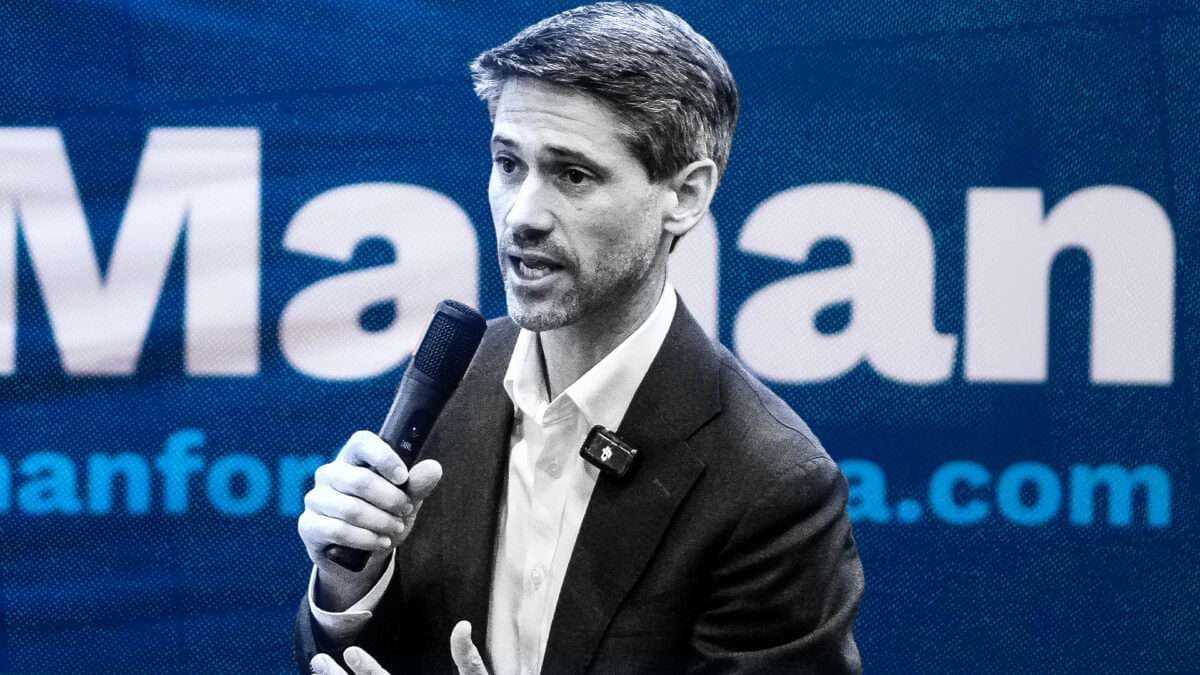
 United States