This is a rush transcript. Copy may not be in its final form.
AMY GOODMAN : This is Democracy Now! , democracynow.org, The War and Peace Report . I’m Amy Goodman.
We’re continuing this Juneteenth special with the musician Rhiannon Giddens. In October, she marked International Wrongful Conviction Day by releasing a video for her song “Another Wasted Life.” The song was inspired by Kalief Browder, a Bronx resident who died by suicide in 2015 at the age of 22 after being detained at Rikers Island jail for nearly three years, after being falsely accused at the age of 16 of stealing a backpack. He was held in solitary confinement for two years and was repeatedly assaulted by guards and other prisoners.
In the video for “Another Wasted Life,” Rhiannon Giddens features 22 people who were wrongly incarcerated. Together, the men collectively served more than 500 years in prison for crimes they did not commit. Rhiannon Giddens made the video in partnership with the Pennsylvania Innocence Project. This is an excerpt.
RHIANNON GIDDENS : [singing] He’s given solitary time
An institutional caprice
It’s a torture of the soul
The narrow confines of control
Thrown down the stinking hole with no hope of release
It’s just another wasted life
It’s just another wasted life
It’s just another wasted life
It’s just another wasted life.
AMY GOODMAN : That was “Another Wasted Life” by our guest, Rhiannon Giddens. The song is featured on her album You’re the One . I asked Rhiannon Giddens to talk about the album and that song.
RHIANNON GIDDENS : Well, it’s an interesting thing. You know, I’ve — a lot of my work, most of my work, you know, especially since going solo — I mean, obviously, The Carolina Chocolate Drops had a mission, you know, of sort of telling the world about Black string band music, of spreading our mentor Joe Thompson’s family music around and just trying to educate about the true history of the banjo. And then, when I went solo, I was able to really go to things that I had been wanting to do, you know, during the band years, but it wasn’t quite the right time, really focusing on women’s voices, focusing on stories from the time of slavery. And really, the common sort of denominator has always been sort of this sense of mission, whether it’s in the band or solo.
But the thing is, that mission is weighty, you know, and I just kind of had gotten to a point where I was like, I kind of feel like if I keep going with — you know, on this trajectory, I’m going to burn out, and then I’m not going to be of any good to anybody, so it’s time to kind of take a turn for a second and explore other parts of my artistry. And that’s what You’re the One really comes out of. It’s songs that I’ve written over the course of like 14 years, that were just, you know, fun songs, songs that were inspired by some of my idols, like Dolly Parton and Aretha Franklin, a lot of like, you know, love songs, a lot of, you know, “You, dog, get out of my house” songs, you know, kind of those sorts of things.
But I can’t — I really can’t leave the mission behind even for this record. So I also really wanted to include “Another Wasted Life,” which I had written, you know, after reading about Kalief Browder some years ago, and had sort of put into a book and kind of went, “OK, like, when it’s the right time, I’ll know what to do with the song.” And then, when this album was sort of coalescing and coming together, I was like, “This is it,” because, you know, it’s a different approach. Like, what I have done before, like, say, with something like Freedom Highway , which is my, I guess, civil rights record, every song there is really kind of infused with thinking about the history of the United States, thinking about, you know, the legacy of slavery, thinking about civil rights and all of that, and it’s a very kind of cohesive album, but it’s all very — every single song kind of has that thought behind it, whereas with this album, all the songs except for one are fun. You know, even the sad love songs are still fun songs. And this kind of sticks out as the mission song. And it’s a different approach, because this then gets all the focus, you know, in terms of the emotional weight and, you know, what it does. So, I’m really excited that I’ve had the opportunity to put it out there, surrounded by, you know, something different, so that it really kind of has an opportunity to jump out at the listener.
AMY GOODMAN : I want to go to Kalief Browder in his own words. This is Kalief speaking to the HuffPost Live’s Marc Lamont Hill back a decade ago, in 2013. Kalief had spent, as we said earlier, three years at Rikers in New York without charge. He was a 16-year-old high school sophomore when he was first detained on suspicion of stealing a backpack. He said while he was in solitary at Rikers, the guards often refused to give him his meals.
KALIEF BROWDER : If you say anything that could tick them off any type of way, some of them, which is a lot of them, w…
Read the full article at Democracy Now! →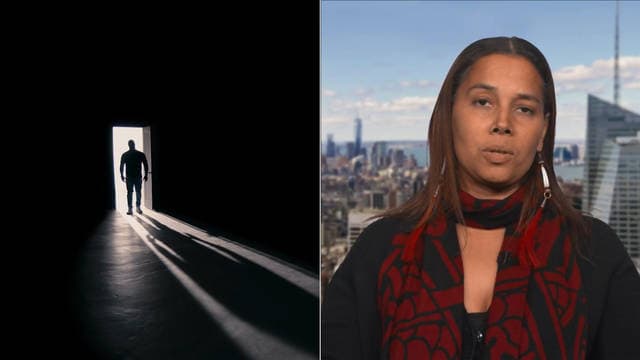
 United States