With over 20,000 kebab shops in the UK, 1.3 million dishes sold every day, and the industry estimated to be worth £2.8 billion - Britons truly love the traditional Turkish takeaway.
Kebabs first arrived on British shores in the 1940s, thanks to Soho's Istanbul Restaurant, with eateries featuring - the now ubiquitous - rotating meat spits starting to appear twenty years later.
Today, nearly every town across the country features at least one independent kebab shop, with upmarket chains - such as German Döner Kebab - following suit, eager to cash in on the post-pub market and cater to fast food fans who are fed up of fried chicken or burgers.
However, the meal is certainly not the choice of takeaway for the health conscious; there's an estimated 2,500 calories - the NHS ' full daily allowance for an adult man - to be found in a typical portion of döner meat and chips.
But while kebabs are often criticised for their high fat and salt content, nutritionists say they can be a better option than many people realise - if you order wisely.
'The goal isn't to turn a kebab into a healthy food but to make small changes that improve the overall balance of the meal,' registered nutritionist Rob Hobson tells the Daily Mail.
Unlike heavily processed fast food, a kebab can contain a good source of protein from grilled meat, alongside nutrient-rich vegetables like lettuce, tomatoes and onions, and gut-health-boosting pickles.
The biggest health pitfalls often come from oversized portions, creamy sauces and calorific sides such as chips.
A middle eastern speciality of succulent pieces of grilled meat, often served with salad or rice
By making a few smart choices when ordering, our expert says it is possible to cut hundreds of calories, reduce saturated fat and increase fibre intake – without sacrificing flavour.
With that in mind, we asked Hobson, author of Unprocess Your Life , to take a look at a typical kebab shop menu and rate them out of five.
Read on to find out how your choice of dish fared...
Shish kebab
Before getting into health swaps, our nutritionist says there is a single menu item that is a good choice for health-conscious diners or people on a diet - a shish kebab, a Middle Eastern speciality of succulent pieces of grilled meat, often served with salad or rice.
'If you're looking for the healthiest option on a typical kebab shop menu, then chicken shish would probably be my first choice,' says Hobson.
'One of the reasons is that it's usually made from whole cuts of chicken that have been marinated and grilled on skewers.
'Unlike some other kebab options, you're generally getting recognisable pieces of meat rather than something that has been minced, processed or compressed. From a nutritional perspective, that tends to make it one of the simpler and less processed choices available.
'Another advantage is that chicken shish is often lower in saturated fat than many other kebab options and are typically served with a substantial salad garnish, which can contribute fibre, vitamins and minerals while helping to create a more balanced meal.'
Verdict: 5/5
Döner kebab
Some examples contained 1,990 calories, nearly a woman's recommended daily intake, 70g of saturated fat, which is three and half times the women's daily guideline amount, and 16.5g of salt.
When someone thinks of a kebab, they often think of big rotating columns of greasy meat – or döner meat.
Figures previously released by food standard agents revealed that t he average British kebab contained almost 6g of salt – the recommended daily limit – as well as huge amounts of saturated fat and nearly 1,000 calories.
Some examples contained 1,990 calories, nearly a woman's recommended daily intake, 70g of saturated fat, which is three and half times a women's daily guideline amount, and 16.5g of salt.
Do you want to lose a stone in six weeks?
Hi, I'm Emma Bardwell, a nutritionist with more than 15 years' experience helping people improve their health and lose weight.
I've been there. I was overweight, unhappy with my skin and stuck in a rut. Then I changed the way I eat. You can now do the same with my tried-and-tested healthy eating plan. And for DailyMail+ subscribers, it's completely free.
Click here to sign up and start your journey
It's near impossible to assess the nutritional information of a döner kebab as you never really know what is on the spit.
'Unlike a grilled chicken skewer or a vegetable kebab, you can't easily identify the ingredients or the proportion of meat and fat that has gone into the final product,' says Mr Hobson.
'Two döner kebabs purchased from different takeaways may look similar but vary considerably in terms of calorie, fat and salt content.'
They might also contain totally different types of meat - or slaughter byproducts.
Earlier this month, an award-winning kebab distributor was slapped with a £500,000 fine after its 'lamb' döner meat was found to have been predominantly made up of skin and fat.
Kismet Kebabs Ltd,…
Read the full article at Daily Mail →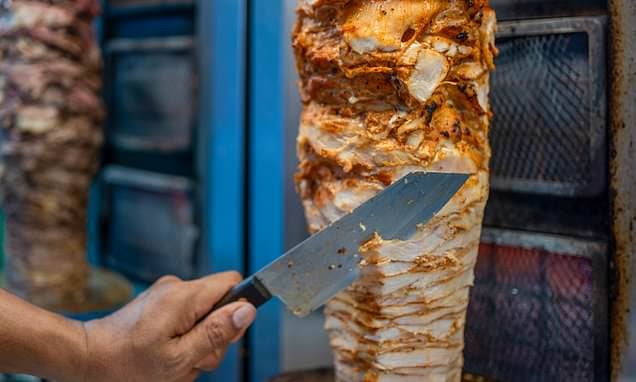
 United Kingdom