Dust hangs in the desert air like smoke, swirling above a football pitch carved from hardened earth.
It's late afternoon, and despite the heat not easing, a group of young men and teenage boys have gathered to play their weekly football match.
Each time one of the players runs to get the ball, an orange cloud rises into the air.
On this makeshift football pitch at the Smara refugee camp in southwestern Algeria , love for the beautiful game runs deep.
For the locals watching on, conversation is also tied to one subject: the World Cup taking place thousands of miles away.
New MEE newsletter: Jerusalem Dispatch
Sign up to get the latest insights and analysis on
Israel-Palestine, alongside Turkey Unpacked and other MEE newsletters
"I think Algeria's team is going to do well," Hafdala Mohamed, one of those in attendance, tells Middle East Eye.
For Mohamed, like many in Algeria's sprawling Sahrawi refugee camps, football is more than entertainment. It's one of the few constants in a life shaped by exile.
'My support for Algeria is unconditional'
- Brahim Salem, Sahrawi refugee
"We play at least once every week," his friend Khalil says, smiling as the teams begin arguing over sides.
Across the camps, football shapes daily life. Children play in dusty streets as families gather around bulky televisions to watch major tournaments.
Now, as the World Cup unfolds in the US, Canada and Mexico, attention is turning almost entirely towards one team: Algeria.
Support runs deep
For many Sahrawis, support for Algeria is rooted in history as much as football.
Today, more than 173,000 Sahrawi refugees live in refugee camps in Algeria, according to the UN.
Most of them fled Western Sahara following Spain's withdrawal from the territory in the 1970s and the outbreak of war between Morocco and the Polisario Front, the movement seeking independence for Western Sahara.
Western Sahara explained
+ Show
- Hide
Western Sahara is a largely desert expanse (266,000 sq km) in the northwest of Africa that is bordered by the Atlantic, Morocco, Mauritania and Algeria. Its indigenous people are the Sahrawis, who mostly speak Hassaniya, an Arabic dialect.
The region was colonised by Spain during the late 19th century and later became known as the Spanish Sahara. Morocco, parts of which were also a former Spanish colony, has long made claims on the region.
In November 1975, King Hassan II of Morocco sent 350,000 civilians and 25,000 troops into what was still Spanish territory, as part of what became known as the "Green March".
Fearing that conflict with Morocco would destabilise the government at home, as it had done with other European colonial powers like France (in Algeria) and Portugal (in Angola), Spain rapidly departed Western Sahara, cutting a secret deal with Morocco and Mauritania, the latter of which also claimed close links to the area.
Signed in the last week of fascist leader General Francisco Franco’s life, the Madrid Accords removed the Sahrawis and their chief representatives, the Polisario Front, from the equation. Two thirds of the territory was given to Morocco, and one third was given to Mauritania.
When Morocco and Mauritania entered Western Sahara in 1975, war began with the Polisario Front, and thousands of Sahrawis were forced to flee to refugee camps in Algeria. Their place has been taken by Moroccan settlers, who have been incentivised to move into the region by Rabat and who now make up the majority of Western Sahara's population.
Polisario, which seeks independence for the territory and is backed by Algeria, defeated Mauritania in 1979. The land won in this war is now known to Sahrawis as the "liberated territories", a largely uninhabited stretch of desert to the east of Morocco's 2,700 km-long border wall.
A 1991 ceasefire broke down in November 2020. There has been sporadic fighting since then.
Timeline
1884: Spain declares Western Sahara a protectorate on 26 December. The Spanish meet immediate resistance from the Sahrawis.
1956: Morocco gains independence from France and Spain on 2 March.
1957: At the United Nations, Morocco makes its first modern claim on Western Sahara (certain treaties from the 17th and 18th centuries included Moroccan claims to some of the region).
1958: Spain creates the overseas province of Spanish Sahara on 10 January.
1966: Creation of the Harakat Tahrir, or the Movement for the Liberation of Saguia al-Hamra and Wadi al-Dhahab. It campaigns for a peaceful end to Spanish rule and self-determination for Western Sahara.
1970: A Harakat Tahrir protest in Laayoune on 17 June is brutally suppressed by Spanish forces, resulting in at least 10 deaths and hundreds of injuries. The movement disbands.
1973: Creation of the Polisario Front on 10 May to represent the Sahrawis.
1974: Spain announces on 20 August that it will hold a referendum to decide the future of the region in the first half of the following year. Morocco rejects the idea. The UN asks the I…
Read the full article at Middle East Eye →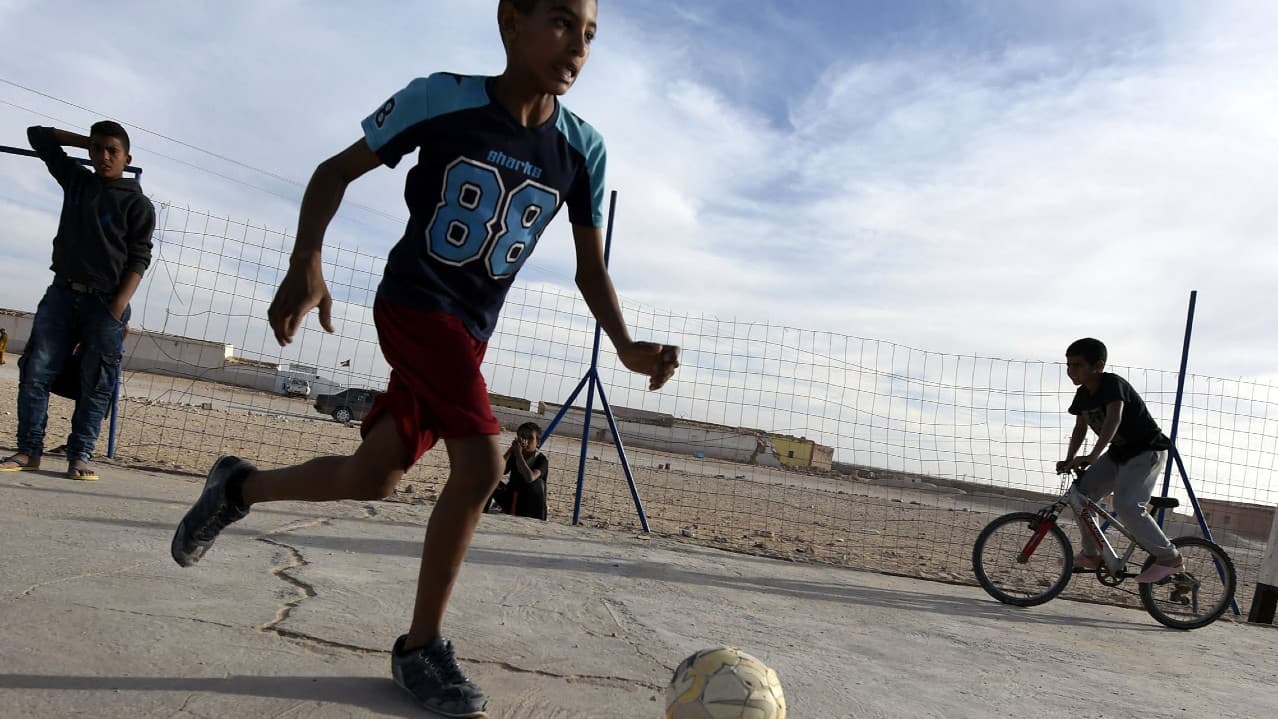
 United Kingdom