In recent months, Albania has found itself grappling with a deepening crisis rooted in the infiltration of illicit financial flows—primarily stemming from drug trafficking and organized crime—that have profoundly distorted its political landscape and economic stability. The persistent influx of laundered drug money into the country has enriched a small elite while leaving much of the population impoverished and disillusioned. This phenomenon has become so entrenched that many argue Albania requires a fundamental restructuring of its institutions to break free from this cycle of corruption and dependency on criminal networks.
The situation has been exacerbated by the lack of effective governance and law enforcement mechanisms capable of curbing these illegal activities. Over the years, organized crime groups have exploited weak regulatory frameworks and porous borders to channel vast sums of money into Albania. These funds often find their way into real estate, construction, and other sectors, enabling criminals to influence local politicians and public officials. As a result, political decisions increasingly reflect the interests of these powerful few rather than the broader populace. This has led to widespread public frustration and eroded trust in government institutions.
Key players in this complex web include both domestic and international actors. Local mafia clans, some of whom have historical ties to Albanian diaspora communities abroad, operate alongside transnational drug cartels that use Albania as a transit point for narcotics destined for European markets. These criminal enterprises benefit from lax border controls and insufficient coordination between national security agencies. Meanwhile, foreign investors and business entities, sometimes linked to these criminal networks, have further complicated the issue by engaging in dubious financial practices that blur the lines between legitimate commerce and illicit activity.
The roots of this crisis can be traced back decades, when post-communist reforms failed to establish robust anti-corruption measures. Instead, power vacuums created opportunities for organized crime to flourish. In the absence of strong legal deterrents, criminal elements gradually infiltrated state apparatuses, including police forces and judicial systems. This erosion of institutional integrity has made it difficult to combat the ongoing flow of illicit funds effectively.
Recent developments highlight the severity of the problem. Reports indicate that several high-profile individuals, including members of influential political factions, have faced scrutiny over alleged involvement in corrupt practices. While specific details remain under investigation, these cases underscore the extent to which corruption has permeated all levels of society. Public outrage has grown as citizens witness the disparity between the wealthy elite and the struggling masses, fueling demands for systemic change.
Reactions from various stakeholders reveal differing perspectives on how to address the crisis. Civil society organizations and independent journalists have called for urgent reforms, emphasizing the need for stronger transparency laws and more rigorous oversight of financial transactions. Some political leaders acknowledge the gravity of the situation but face challenges in implementing meaningful solutions due to internal divisions and external pressures. International bodies have also expressed concern, urging Albania to take decisive action against organized crime and money laundering.
Looking ahead, the path forward remains uncertain. Experts suggest that comprehensive anti-corruption strategies must be implemented, involving enhanced cooperation between national and international authorities, stricter regulations on financial institutions, and greater civic engagement to hold leaders accountable. Without such efforts, the continued inflow of illicit funds threatens to further destabilize Albania’s already fragile socio-economic environment. The challenge now lies in translating awareness into concrete policy changes that can restore public confidence and ensure sustainable development for all citizens.
2 informaciones
 Balkan Insight (BIRN)IndependienteIzquierdaayer
El artículo analiza el tema en curso de la corrupción relacionada con las drogas en Albania, destacando cómo el crimen organizado canaliza fondos ilícitos en el país. Esta afluencia de dinero enriquece a un pequeño grupo mientras socava la integridad política y exacerba la desigualdad económica. La situación se describe como un ciclo en el que las redes criminales manipulan los sistemas políticos para obtener ganancias financieras, dejando a la población en general empobrecida.
Lectura del sesgo (Izquierda): El artículo enmarca el problema como un fracaso sistémico impulsado por el crimen organizado y la corrupción de la élite, lo que se alinea con las críticas progresistas de las estructuras de poder.
 N1 SrbijaIndependienteCentrohace 5 d
Según informes de medios locales, varios políticos fueron arrestados en Irak a principios del 28 de junio de 2026, por cargos de corrupción. Los arrestos siguieron a las declaraciones del ex viceministro de Petróleo Adnan al-Dulaimi, quien fue arrestado en mayo. Las fuerzas de seguridad sellaron las entradas a la Zona Verde de Bagdad, donde se encuentran las instituciones gubernamentales y las embajadas, y realizaron redadas. Según un informe de Associated Press (AP), siete personas fueron arrestadas, incluidos cinco parlamentarios. Algunos de los detenidos pertenecían al bloque político del ex primer ministro Mohammed Shia al-Sadr. El bloque de Al-Sadr había ganado la mayoría de los escaños en las elecciones parlamentarias ordinarias de noviembre de 2023, pero luego se retiró del Marco de Coalición, una coalición de partidos chiítas aliados con Irán que los llevó al poder, por desacuerdos sobre el candidato preferido del primer ministro. Fue reemplazado por el empresario Ali-Zaidi, quien recibió la aprobación de los Estados Unidos por cargos de corrupción e influencia en Irak.
Lectura del sesgo (Centro): El artículo presenta el evento de manera factual, citando múltiples fuentes y proporcionando contexto sobre la dinámica política en Irak. No muestra un claro sesgo hacia ningún lado, ofreciendo información sobre los arrestos y el panorama político más amplio sin favorecer abiertamente a un grupo sobre otros.
★
Mantengamos las noticias honestas.
ObjectiveNews se financia con los lectores y no tiene anuncios: te mostramos el sesgo en lugar de ocultarlo. Apoya el periodismo independiente por 5 €/mes.
Hazte suscriptor
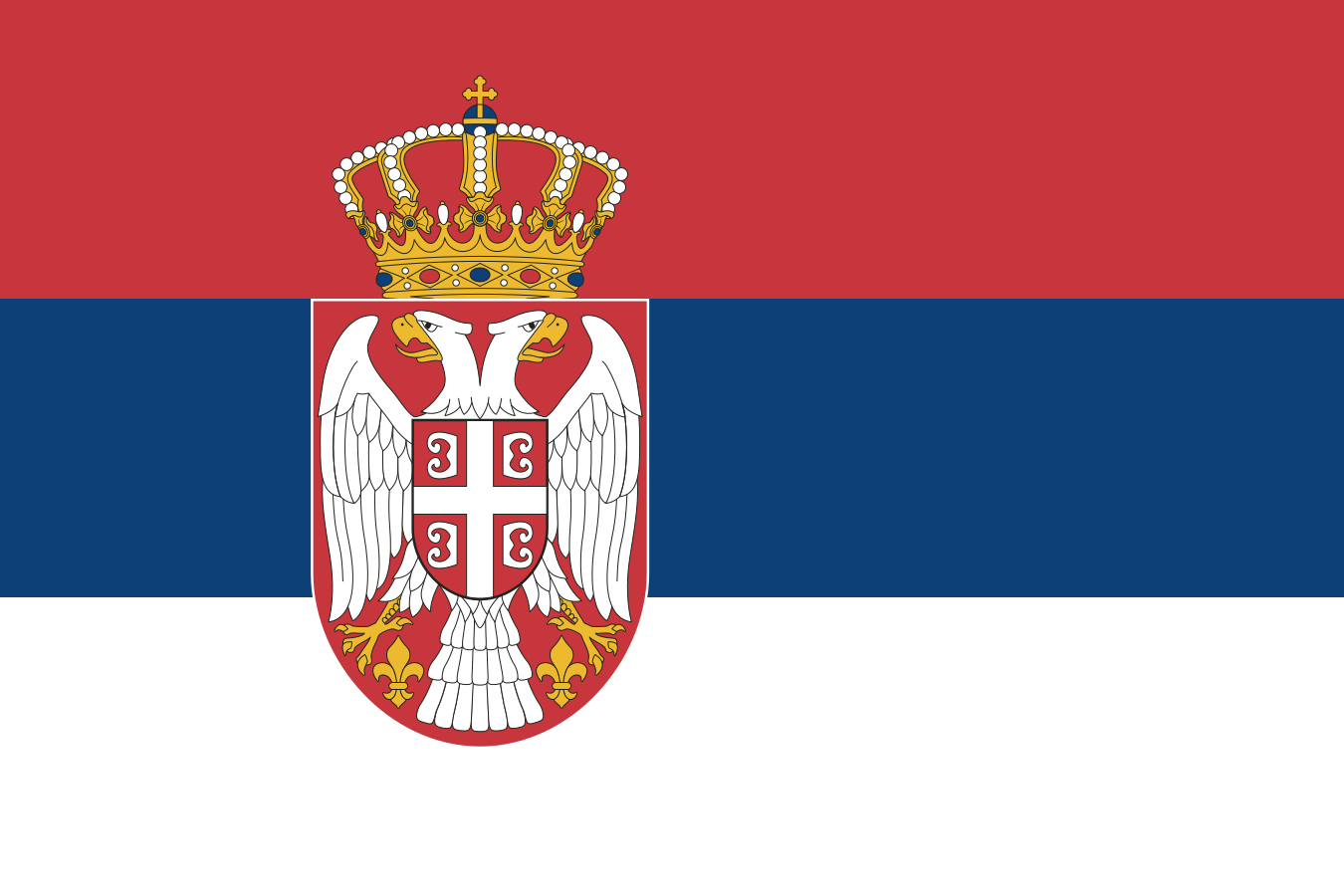 Serbia


