The United Nations ' human rights chief has called for urgent international regulation of autonomous weapons systems such as drones amid the rising risk of war crimes.
"We are seeing a global shift in how war is waged," Volker Türk told the UN Human Rights Council in Geneva on Monday, pointing to the role of deadly, unmanned drones in conflicts in Ukraine , DR Congo , Sudan , Myanmar and the Middle East .
"The UN has warned for many years against the development of lethal autonomous weapons," he said. "This reality is now upon us."
In Ukraine, where Russia's full-scale invasion is now into its fifth year, Türk said "relentless drone attacks have caused mass casualties and terrorized civilians."
Sudan: huge increase in drone attacks
Meanwhile in Sudan, Türk said that more than 1,000 civilians had been killed by indiscriminate drone strikes this year alone.
The US-based Armed Conflict Location & Event Data Project (ACLED) observed an 81% increase in drone attacks and a 600% increase in drone-related deaths in the war-torn east African country between 2024 and 2025.
"Sudan's warring parties have increased their brutality from the skies, using drones supplied by their backers to target civilians and aid workers," concurred the United Kingdom 's Minister for Africa and International Development, Jenny Chapman.
"This is deplorable and must stop," she told the Associated Press (AP), adding that it was vital for organizations to "document abuses and preserve evidence – essential steps to breaking the cycle of impunity."
Sudan's civil war — the limits of humanitarian aid
To view this video please enable JavaScript, and consider upgrading to a web browser that supports HTML5 video
Drone warfare: UN chief warns against loss of human control
Back in Geneva , Türk said the increased use of unmanned systems was "creating a new circle of hell" for non-combatants in warzones which risks being exacerbated by advances in artificial intelligence (AI) .
"The prospect of billion-dollar, AI-enabled weapons [being] brought down by billion-dollar, AI-enabled defensive shields exposes the horror, emptiness, and futility of war," he said.
"Autonomous weapons cannot become a license for atrocity crimes."
Amid growing fears that human could lose control of fully-automated weapons systems, sometimes referred to colloquially as killer robots, calls are growing for regulation.
International treaties are already in place to govern the use of chemical weapons and certain munitions such as cluster bombs , and Türk has called for a similar treaty to regulate the use of unmanned drones.
"States urgently need to consider the moral and legal questions this raises," he said, calling on them to "agree on a common approach that protects civilian lives, and recommit to diplomacy and mediation."
He said countries needed to update their legal frameworks to "require human control and ensure accountability."
Ukraine is now the world's AI war lab
To view this video please enable JavaScript, and consider upgrading to a web browser that supports HTML5 video
Edited by: Wesley Rahn
Read the full article at Deutsche Welle (English) →📄Source document: Udruženje žrtava rata Foča 92-95
3 reports
 Dnevni avazParty-alignedCenter2 days ago
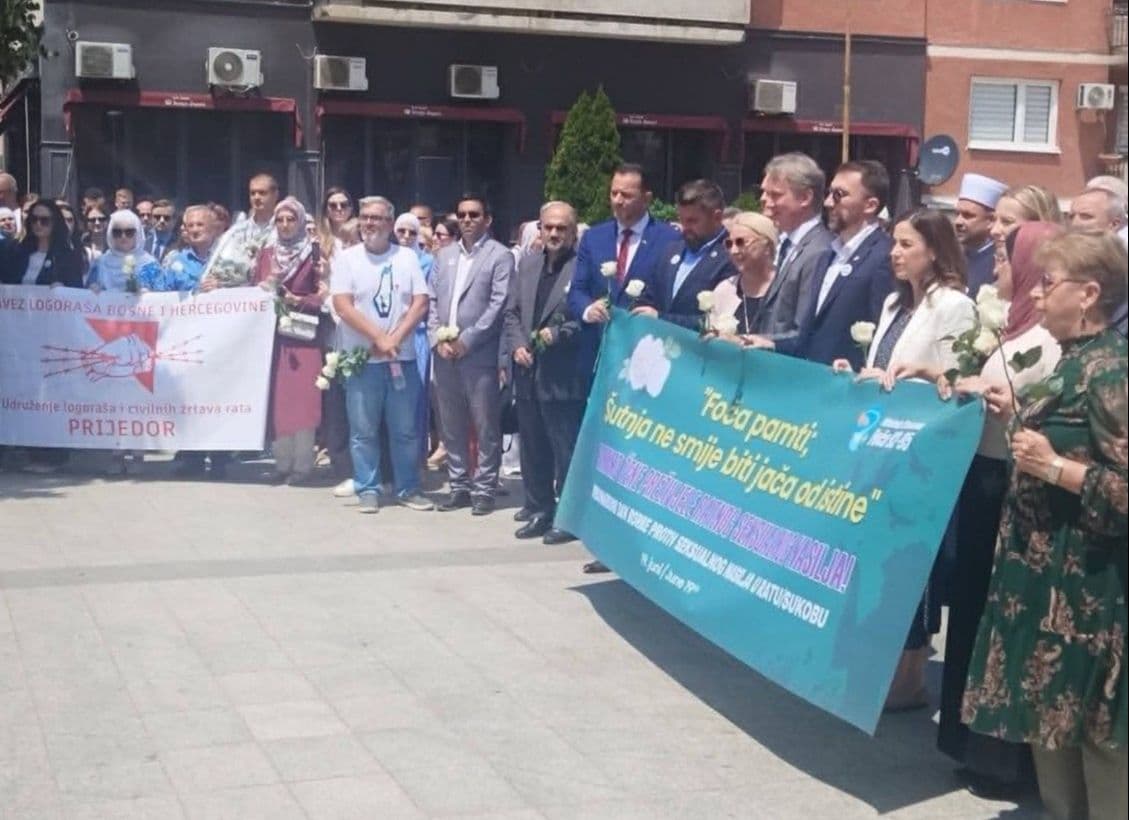
The International Day against Sexual Violence in War was commemorated in Foča with a ceremony honoring victims of wartime sexual violence during the Bosnian War (1992–1995). The event took place near the infamous Partizan Sports Hall, which has been linked to mass graves and widespread sexual violence. The ceremony emphasized the importance of remembering the truth and justice for survivors, highlighting the need to prevent such crimes from recurring.
Bias read (Center): The article focuses on commemorating victims of wartime sexual violence and emphasizes remembrance and justice without overtly favoring any political side. It uses neutral language and does not present biased perspectives or omit key contextual information.
Official sources cited
- organisation Udruženje žrtava rata Foča 92-95
 Balkan Insight (BIRN)IndependentCenter2 days ago
Survivors of wartime sexual violence in the former Yugoslavia continue to struggle for legal recognition and protection for children born as a result of such violence. These children, referred to as 'invisible children,' remain excluded from public policies aimed at civilian war victims. Experts argue that current approaches contradict evolving international legal standards, which increasingly recognize these children as entitled to protection, support, and reparations.
Bias read (Center): The article presents information without overtly favoring any political side. It discusses the legal and social challenges faced by children born of wartime sexual violence, citing expert opinions and advocacy efforts. The language remains neutral, focusing on the lack of legal recognition and the呼吁
Official sources cited
- organisation Iris Knezevic, Executive Director of the Youth Initiative for Human Rights in Croatia
 Deutsche Welle (English)State / PublicCenter5 days ago
The United Nations' human rights chief, Volker Türk, has urged the international community to regulate autonomous weapons systems like drones, citing their increasing use in conflicts around the world. He highlighted the impact of drone warfare in regions including Ukraine, DR Congo, Sudan, Myanmar, and the Middle East. In Sudan, over 1,000 civilians were reported killed by drone attacks in 2025, with a significant rise in both attacks and related deaths compared to previous years. UK Minister Jenny Chapman condemned the use of drones against civilians and aid workers.
Bias read (Center): The article presents statements from the UN human rights chief and includes data from ACLED and a UK minister without overtly favoring any side. It reports on concerns regarding drone usage in conflict zones but does not exhibit clear bias toward one perspective over another.
Official sources cited
- government United Nations Human Rights Chief Volker Türk
- organisation Armed Conflict Location & Event Data Project (ACLED)
- government UK Minister for Africa and International Development Jenny Chapman