Iran’s Islamic Revolutionary Guard Corps (IRGC) has set up secretive new cells in Iraq to carry out attacks on Gulf countries that host American forces, bypassing established militia networks to avoid detection, eight Iraqi sources told Reuters.
Three or four cells, each comprising about 10 elite Iraqi Shi’ite Muslim fighters, launched at least seven drone attacks from desert locations near the southern cities of Basra and Samawa against sites in Kuwait, Saudi Arabia and the United Arab Emirates between April 20 and May 17, three of the sources said.
A number of their members were drawn from the Islamic Resistance in Iraq, an umbrella group of hardline Shi’ite factions with thousands of fighters. But the new groups operate outside its command structure, reporting directly to the IRGC, according to the sources, who include two Iraqi military officials, another security official and five local militia commanders.
The establishment of the new Iraqi cells, which has not previously been reported, reflects a shift in IRGC tactics aimed at preserving Iran’s ability to project force across the region at a time when its armed proxy groups are greatly diminished, in part following years of fighting with Israel, and its own military and economic resources are depleted following the US-Israeli war with Iran, the five militia commanders said. The IRGC is a US-designated terrorist organization.
Iraq, a Shi’ite-majority country, has a host of militias, many of which maintain close ties to Tehran. They form a key pillar of Iran’s regional “Axis of Resistance,” which stretches from Gaza and Lebanon to Yemen and Iraq.
Get The Times of Israel's Daily Edition
by email and never miss our top stories
By signing up, you agree to the terms
Groups acting under the banner of Islamic Resistance in Iraq have claimed responsibility for dozens of drone and rocket attacks against American assets in the country, drawing deadly retaliatory airstrikes, since the US and Israel began the war with Iran on February 28. But there has been no mass mobilization of Iran’s proxies inside Iraq’s borders.
Members of the Iraqi military’s Popular Mobilization Forces, which is comprises pro-Iran Shi’ite militias, attend a funeral for colleagues killed in a US airstrike in Anbar, in Najaf, Iraq, April 1, 2026. (AP Photo/Anmar Khalil)
Several powerful Shi’ite factions there have been signaling since last year that they are ready to disarm and focus on domestic politics to avert an escalating conflict with the administration of US President Donald Trump. That development may have spurred the IRGC to set up groups under its direct control, according to Jasim al-Bahadli, a retired Iraqi army general, and two lawmakers from the Shi’ite governing alliance.
Two of these factions, Asaib Ahl al-Haq and the Imam Ali Brigades, announced this month that they would begin surrendering their weapons to state authorities following repeated US warnings to Iraq’s government to disband armed groups operating on its soil.
“The newer groups established by the IRGC appear smaller, more ideologically hardened and more tightly controlled, reflecting Iran’s need to conserve resources amid economic strain,” said Bahadli, who is an expert on Shi’ite armed groups.
US-Iran deal does not address Tehran’s support for proxies
The US and Iranian presidents signed an interim agreement this week to end the war, with negotiations to follow on difficult issues like the future of Tehran’s nuclear program. But Iranian officials have said Tehran’s support for “resistance groups” — including terror groups that have waged war against Israel, and that, like Iran, overtly seek Israel’s demise — is not up for discussion, and the agreement does not address the issue.
Iran’s foreign ministry and its missions to the United Nations in New York and Geneva did not immediately respond to detailed questions for this article.
The US State Department reiterated “expectations that the Iraqi government takes immediate measures to dismantle all the tools of Iran’s destabilizing activities in Iraq, to include the IRGC and Iran-aligned terrorist militias in Iraq.”
US President Donald Trump (left), signing the Persian-language version of the memorandum of understanding with Iran, at the Palace of Versailles in France, June 17, 2026. (Screenshot/White House via X); Iranian President Masoud Pezeshkian signs the MOU in a photo released June 17, 2026, by the regime-run IRNA news agency. (IRNA via X)
At a meeting on Monday, Iraq’s new prime minister, Ali al-Zaidi, and US envoy Tom Barrack, who is also the ambassador to Turkey, discussed Iraqi plans to ensure “the complete disarmament and disbandment of all armed groups” operating outside Iraqi state control and to ensure “Iraqi territory cannot be used by any side to threaten regional peace,” according to a joint statement.
Zaidi’s military spokesman, Sabah al-Numan, declined to comment for this article.
Kuwait’s information ministry, the Saudi govern…
Read the full article at The Times of Israel →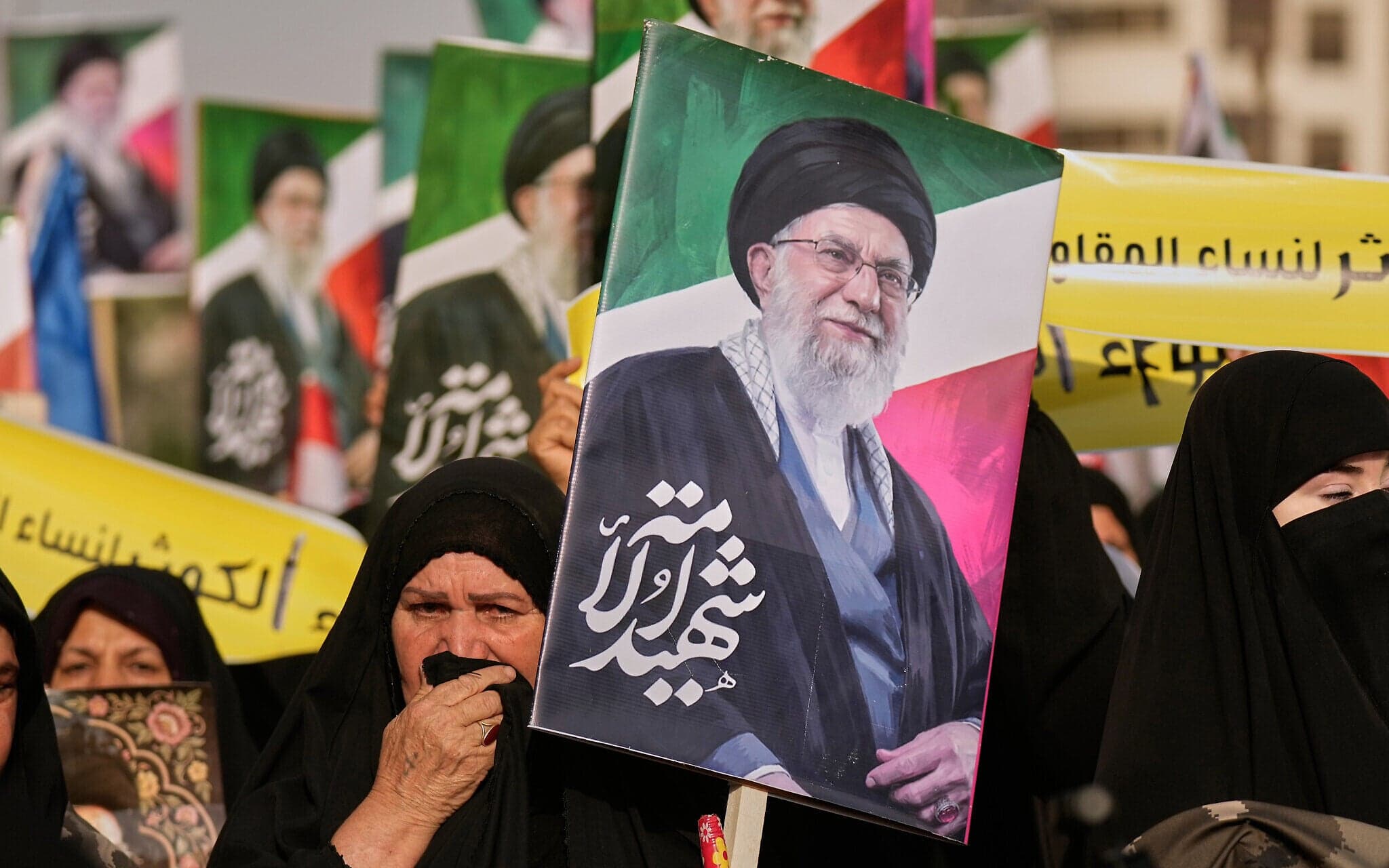
 IL
IL