A joint military exercise involving KFOR, EULEX, the Kosovo Police, and the Kosovo Security Forces (KBS) has raised significant concerns among Serbian political figures and experts. The exercise, named "Golden Sword 2026," took place near Pristina at the Vrelo camp. According to international law, specifically Resolution 1244, KFOR remains the sole legitimate armed force in Kosovo. However, the inclusion of the KBS in this exercise suggests a shift in the balance of power and responsibilities within the region.
The exercise aimed to test crisis management capabilities and improve coordination between security institutions. Representatives from KFOR explained that the participation of the KBS was in line with their initial mandate of civil protection. Despite this, critics argue that such exercises could lead to the transformation of the KBS into a more conventional military force. This concern is heightened by reports indicating that the KBS is being equipped with offensive weaponry and is undergoing operational training under the support of KFOR and NATO.
Experts highlight that the KBS, originally formed from the Kosovo Verification Mission (KVM), has evolved significantly since its inception. The KVM was established after the 1999 conflict to ensure compliance with Resolution 1244, which mandated the disarmament of all paramilitary groups in Kosovo. However, the KBS has grown beyond its initial role, raising questions about the adherence to these mandates.
Critics from Belgrade have expressed strong disapproval of the KBS's involvement in joint exercises with KFOR. They argue that the KBS should not exist at all on the territory of Kosovo, let alone participate in military drills alongside a foreign peacekeeping mission. These exercises, they claim, are designed to prepare for scenarios involving protests and unrest, which they believe are targeted against the Serbian population.
Notably, the behavior of KFOR, particularly when led by a Turkish general, has been scrutinized. There are allegations that this leadership allows the transport of large quantities of offensive weapons to the KBS, enabling them to conduct operations rather than preventing them. This perceived bias towards the KBS has further fueled tensions and concerns regarding the safety of the Serbian community in Kosovo.
In addition to the military exercises, the KBS has also participated in international training programs. A recent exercise called "Combat Pauer 26" took place in Slunj, Croatia, where representatives of the KBS demonstrated high levels of professionalism and readiness to collaborate with allied forces. The exercise involved over 3,000 Croatian military personnel and hundreds of soldiers from various countries, including the United States, Italy, Slovenia, Albania, Portugal, Montenegro, Romania, and Georgia. The focus was on enhancing interoperability and strengthening preparedness for contributions to security and peace.
During the exercise, the KBS showcased integrated air and land combat operations through simulated battle scenarios. The minister of defense of the so-called state of Kosovo praised the KBS’s new equipment and highlighted improvements in logistical self-sufficiency, particularly in providing food for its members. Previously, this service had been outsourced to private operators, but now the KBS has developed full organic capacity to supply its troops, demonstrating growth in capability and institutional maturity.
The participation of the KBS in such exercises is seen as more than just a military engagement; it is viewed as evidence of Kosovo's progress in strengthening its defensive capacities and becoming increasingly capable of responding to security challenges. The KBS members are described as gaining experience, improving professional skills, and confirming their readiness for participation in international missions and activities.
The collaboration between Kosovo and Croatia extends beyond strategic partnerships, rooted in genuine friendship between two nations facing common challenges. The minister emphasized that Kosovo will continue to be a reliable partner in contributing to regional security and stability.
As these developments unfold, the implications for the future of Kosovo and its relations with Serbia remain uncertain. The transformation of the KBS into a more conventional military force, supported by KFOR and NATO, raises questions about the long-term impact on regional dynamics and the potential for increased tensions. The situation underscores the complex interplay of international interests, local governance, and the aspirations of different communities in the Balkans.
★
Ohranimo novice poštene.
ObjectiveNews financirajo bralci in je brez oglasov – pristranskost vam pokažemo, ne skrijemo. Podprite neodvisno novinarstvo za 5 €/mesec.
Postani podpornik
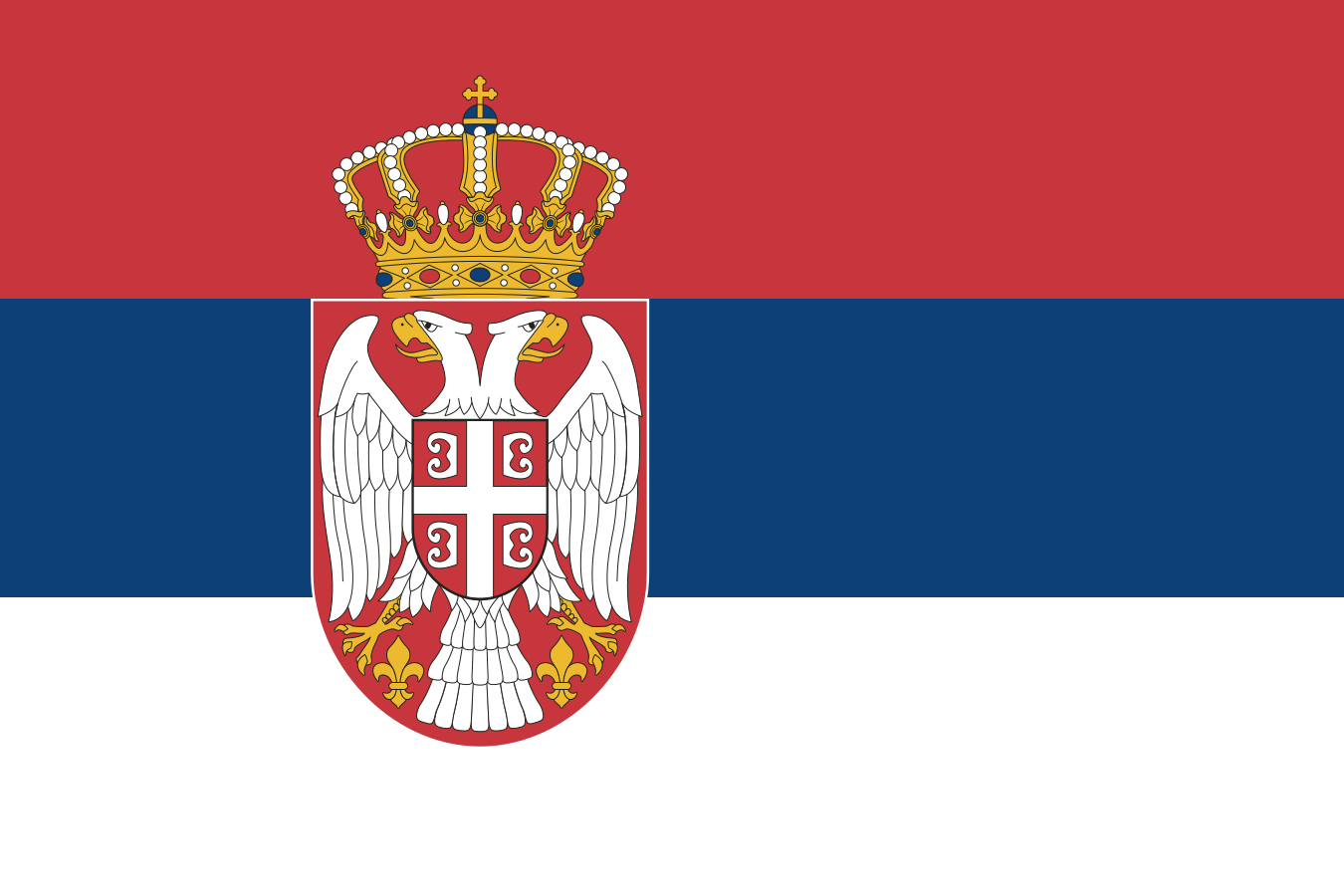 Serbia


