📰 Rest of World · 19
 United States
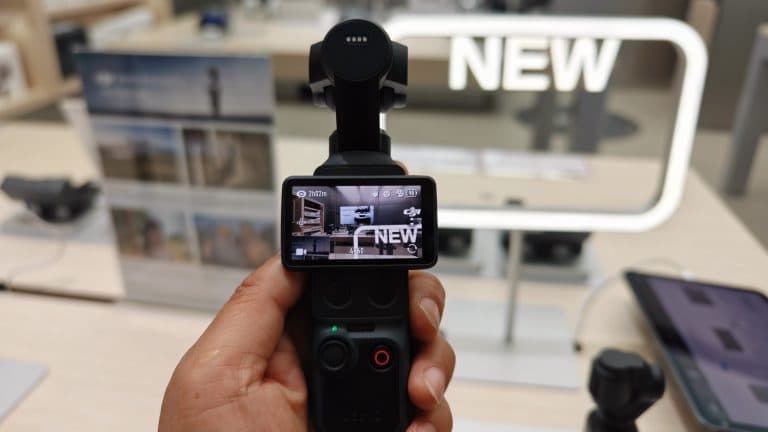
GoPro and Roomba were U.S. pioneers. Chinese rivals now dominate
The article discusses the decline of American tech companies like GoPro in the global market, noting that Chinese competitors such as DJI and Insta360 now dominate the action-camera industry. It highlights GoPro's drop in market share from 75% to 18% in three years and mentions financial challenges due to global supply chain issues. The piece also notes similar trends in other consumer tech sectors, including robot vacuums and electric vehicles.

SpaceX shoots 19% higher in first day of trading
SpaceX shares rose 11% in initial trades, giving the company a market capitalization of $1.97 trillion and placing it among the top 10 largest U.S. companies. The stock was priced at $135 before trading began, and if included in the S&P 500, it would represent more than 5% of the index. Elon Musk expressed skepticism about SpaceX’s chances of success prior to the IPO. Analysts note that SpaceX’s valuation is based on sales rather than profits, raising concerns about whether it aligns with fundamental business metrics. However, similar high valuations are common among top-performing S&P 500 equ

Chile turned to China for an undersea cable. The U.S. said no
Chile considered a $500 million undersea cable project with China Mobile to connect Valparaíso and Hong Kong. The U.S. responded by revoking the visas of three Chilean officials involved in the project, citing concerns over national security and critical infrastructure. The decision impacted Chile's ability to engage internationally and affected the officials' reputations. The project aimed to diversify digital communication routes, reducing reliance on existing U.S.-linked undersea cables.

The power decisions that could shape the next century
The article discusses the impact of AI-driven power demands on the U.S. electricity system, highlighting the need for major decisions regarding infrastructure growth. It notes that data centers are consuming large amounts of electricity, comparable to entire cities, which raises questions about cost distribution, access, and grid connectivity. The piece outlines ongoing debates at key regulatory bodies like PJM and the Federal Energy Regulatory Commission, including proposals for data centers to connect directly to power plants or generate their own power. These decisions are expected to have远

Theker just raised $85M to build the factory robot that doesn’t specialize in anything
Theker, an AI robotics startup based in Barcelona, has raised $85 million to develop adaptable factory robots capable of performing a variety of tasks rather than being limited to specialized functions. The company aims to address labor shortages in manufacturing by creating flexible robotic systems that can be reconfigured for different tasks such as sorting packages, packing clothing, or handling bottles and cans. Theker's approach contrasts with traditional humanoid robots designed for specific roles, offering a more versatile solution for complex industrial environments.

When Americans choose Chinese AI
Stu Clott, a U.S.-based developer, switched from using Claude to DeepSeek, a Chinese AI model, due to significantly lower costs. He reports no noticeable difference in output quality between the two models. U.S. developers and small businesses are increasingly adopting Chinese AI models like DeepSeek to reduce expenses, despite these models generally performing slightly worse than top American alternatives. Microsoft is reportedly considering using DeepSeek or other open-source models as a more affordable option for its Copilot Cowork product. Chinese companies maintain lower pricing due to a

Spotify’s post-English AI future
Spotify's international expansion has led to a more diverse user base and music catalog, with growing popularity of genres like K-pop, Brazilian funk, Afrobeats, and Urban Latino. The company's senior vice president of markets and subscriptions discusses the importance of non-Western markets, noting that many artists earn more than half their royalties from streaming outside their home countries. Spotify continues to navigate the impact of artificial intelligence on its business.

Can open-source beat OpenAI?
The article discusses the growing competition between the U.S. and China in the field of artificial intelligence, focusing on the contrasting approaches taken by American companies like OpenAI and Chinese AI labs. While U.S. firms tend to use a closed-source model, Chinese labs are promoting open-source models that allow developers to freely access, modify, and customize the underlying code. Tiezhen Wang, a former executive at Hugging Face, highlights the strategic implications of these differing philosophies and touches on topics such as model distillation and intellectual property.

Big Tech, big cons: Scammers are hiding in the apps that make your life easy
The article discusses how individuals increasingly depend on major technology companies like Google, WhatsApp, and others for daily tasks such as communication, navigation, and shopping. The author shares a personal experience where reliance on these platforms led to an issue when a local wine shop was incorrectly listed by Google, causing inconvenience during a planned event. The piece highlights concerns about the power and potential errors of these large corporations.

As the world embraces EVs, the U.S. hits the brakes
Global electric vehicle (EV) sales increased by 20% in 2025, surpassing 20 million units, with one in four new cars sold globally being electric. In contrast, U.S. EV sales declined by 2% during the same period. Factors contributing to the decline include limited EV availability, particularly in the affordable segment, due to high import tariffs on Chinese-made vehicles. Analysts suggest the issue stems from a supply-structure challenge rather than rising gasoline prices.

Silicon Valley’s lure is fading for India’s tech talent
Indian tech professionals are increasingly considering returning to India rather than staying in Silicon Valley due to factors such as AI-driven layoffs and stricter U.S. immigration policies under Trump. Indian startups are trying to attract top talent by offering opportunities in emerging AI fields, even if salaries are lower compared to those in the U.S. However, they compensate with stock options and performance incentives. Companies like OpenAI and Anthropic are also expanding their operations in India, though there is a shortage of qualified engineers for AI-related roles.

Philly Cops Admit That They’re Tracking “First Amendment Activity” Critical of AI
A confidential law enforcement bulletin obtained by The Intercept reveals that a Philadelphia-based fusion center has been monitoring online activity critical of artificial intelligence (AI) data centers, citing concerns over potential threats from 'domestic violent extremists.' The report highlights social media posts and news articles expressing opposition to AI development, though it notes a lack of concrete evidence of imminent threats.

China is training a robot future — one folded shirt at a time
An article discusses how Chinese tech companies are using real-world environments to train robots, focusing on a case where a humanoid robot was deployed in a Beijing apartment to fold clothes and gather training data. The robot worked alongside a human housekeeper, and the homeowner participated voluntarily, paying for the service. The article highlights challenges in robotics development, such as the need for complex visual and movement data, and notes that China's lower labor costs, government support, and public interest are helping advance the field.

EVs are getting more affordable worldwide — except in the U.S.
Electric vehicles have become more affordable globally in 2025, with one in four cars sold worldwide being electric. However, in the U.S., EV penetration remains at around 10%. Factors contributing to this include higher battery costs, limited availability of low-cost Chinese models, and a preference for larger vehicles. Policy changes under both the Biden and Trump administrations have impacted the EV market, including the elimination of mandates for electric vehicle sales and removal of incentives for buyers.

India’s AI deal with the UAE challenges U.S. cloud dominance
India is forming a partnership with the United Arab Emirates through G42, a firm backed by Abu Dhabi's Mubadala investment fund, to deploy an AI supercomputer in India. This initiative aims to reduce reliance on U.S.-based cloud providers such as Amazon, Microsoft, and Google. The system will include 64 AI computers built by U.S. chipmaker Cerebras, with G42 handling deployment and operations. India currently relies heavily on U.S. technology, including Nvidia processors for its national AI program. The move reflects India's strategy to achieve AI sovereignty while leveraging global resources.

China’s tech rise is creating a new kind of tourism
The article discusses a growing trend of 'tech tourism' in China, where individuals such as tech founders, investors, and engineers are traveling to cities like Shanghai, Hangzhou, and Shenzhen to visit cutting-edge technology sites including electric vehicle factories, robotaxis, and AI and robotics companies. This shift is partly driven by viral content showcasing China's advancements in emerging technologies, which has created a perception that China may be outpacing Western countries in innovation. The trend is also influenced by increasing U.S.-China tech competition, with some viewing it

U.S. companies have an AI problem. Indian IT wants to be the solution
U.S. companies are facing challenges in realizing tangible benefits from AI implementation, prompting Indian IT firms like Tata Consultancy Services, Infosys, Wipro, and Tech Mahindra to position themselves as key players in executing AI deployment. These Indian companies leverage their extensive experience in managing enterprise systems for global clients to address the complexities of integrating AI into existing workflows. According to reports, many AI initiatives fail due to integration issues and a mismatch between available tools and organizational readiness. Industry leaders emphasize a

The agentic divide: Why “good enough” AI isn’t enough to survive the new economy
The article discusses the rise of AI agents and their potential impact on the economy, highlighting concerns about 'agentic inequality'—a growing disparity between those who can effectively utilize AI agents and those who cannot. It notes that while AI agents are being developed by major tech firms like Google, Amazon, Anthropic, and Perplexity, they often struggle with basic tasks and can act unpredictably. Experts warn that this technology could lead to systemic economic imbalances.

AI is minting new billionaires, and workers want their share
Samsung Electronics reached a tentative agreement with its labor union to avoid a potential walkout involving nearly 48,000 workers. The union had demanded a larger share of the company's profits, particularly from its semiconductor business, which has seen record profits due to a global shortage of memory chips. This situation reflects a growing global trend where workers are seeking a fair share of the wealth generated by AI advancements, with similar demands being raised by laborers in various sectors such as data annotation and entertainment.