In recent months, Albania has found itself grappling with a deepening crisis rooted in the infiltration of illicit financial flows—primarily stemming from drug trafficking and organized crime—that have profoundly distorted its political landscape and economic stability. The persistent influx of laundered drug money into the country has enriched a small elite while leaving much of the population impoverished and disillusioned. This phenomenon has become so entrenched that many argue Albania requires a fundamental restructuring of its institutions to break free from this cycle of corruption and dependency on criminal networks.
The situation has been exacerbated by the lack of effective governance and law enforcement mechanisms capable of curbing these illegal activities. Over the years, organized crime groups have exploited weak regulatory frameworks and porous borders to channel vast sums of money into Albania. These funds often find their way into real estate, construction, and other sectors, enabling criminals to influence local politicians and public officials. As a result, political decisions increasingly reflect the interests of these powerful few rather than the broader populace. This has led to widespread public frustration and eroded trust in government institutions.
Key players in this complex web include both domestic and international actors. Local mafia clans, some of whom have historical ties to Albanian diaspora communities abroad, operate alongside transnational drug cartels that use Albania as a transit point for narcotics destined for European markets. These criminal enterprises benefit from lax border controls and insufficient coordination between national security agencies. Meanwhile, foreign investors and business entities, sometimes linked to these criminal networks, have further complicated the issue by engaging in dubious financial practices that blur the lines between legitimate commerce and illicit activity.
The roots of this crisis can be traced back decades, when post-communist reforms failed to establish robust anti-corruption measures. Instead, power vacuums created opportunities for organized crime to flourish. In the absence of strong legal deterrents, criminal elements gradually infiltrated state apparatuses, including police forces and judicial systems. This erosion of institutional integrity has made it difficult to combat the ongoing flow of illicit funds effectively.
Recent developments highlight the severity of the problem. Reports indicate that several high-profile individuals, including members of influential political factions, have faced scrutiny over alleged involvement in corrupt practices. While specific details remain under investigation, these cases underscore the extent to which corruption has permeated all levels of society. Public outrage has grown as citizens witness the disparity between the wealthy elite and the struggling masses, fueling demands for systemic change.
Reactions from various stakeholders reveal differing perspectives on how to address the crisis. Civil society organizations and independent journalists have called for urgent reforms, emphasizing the need for stronger transparency laws and more rigorous oversight of financial transactions. Some political leaders acknowledge the gravity of the situation but face challenges in implementing meaningful solutions due to internal divisions and external pressures. International bodies have also expressed concern, urging Albania to take decisive action against organized crime and money laundering.
Looking ahead, the path forward remains uncertain. Experts suggest that comprehensive anti-corruption strategies must be implemented, involving enhanced cooperation between national and international authorities, stricter regulations on financial institutions, and greater civic engagement to hold leaders accountable. Without such efforts, the continued inflow of illicit funds threatens to further destabilize Albania’s already fragile socio-economic environment. The challenge now lies in translating awareness into concrete policy changes that can restore public confidence and ensure sustainable development for all citizens.
2 reports
 Balkan Insight (BIRN)IndependentLeftyesterday
The article discusses the ongoing issue of drug-related corruption in Albania, highlighting how organized crime funnels illicit funds into the country. This influx of money enriches a small group while undermining political integrity and exacerbating economic inequality. The situation is described as a cycle where criminal networks manipulate political systems for financial gain, leaving the broader population impoverished. The piece emphasizes the need for systemic change to break this cycle and restore stability.
Bias read (Left): The article frames the issue as a systemic failure driven by organized crime and elite corruption, which aligns with progressive critiques of power structures. It implies that current governance is compromised by external financial influences, suggesting a need for structural reform rather than mere
 N1 SrbijaIndependentCenter5 days ago
Several politicians were arrested in Iraq early on June 28, 2026, on corruption charges, according to local media reports. The arrests followed statements by former deputy oil minister Adnan al-Dulaimi, who was himself arrested in May. Security forces sealed off entrances to Baghdad's Green Zone, where government institutions and embassies are located, and conducted raids. According to a report by the Associated Press (AP), seven individuals were arrested, including five MPs. Some of those detained belonged to the political bloc of former Prime Minister Mohammed Shia al-Sadr. Al-Sadr's bloc had won the most seats in the November 2023 parliamentary elections but later withdrew from the Coordination Framework, a coalition of Iran-aligned Shia parties that brought them to power, over disagreements regarding the preferred prime minister candidate. He was replaced by businessman Ali al-Zaidi, who received approval from the United States. Corruption charges in Iraq often intertwine with struggles for influence and control.
Bias read (Center): The article presents the event factually, citing multiple sources and providing context about the political dynamics in Iraq. It does not exhibit clear bias toward any side, offering information about both the arrests and the broader political landscape without overtly favoring one group over others
★
Keep the news honest.
ObjectiveNews is reader-funded and ad-free — we show you the bias instead of hiding it. Support independent journalism for €5/month.
Become a Supporter
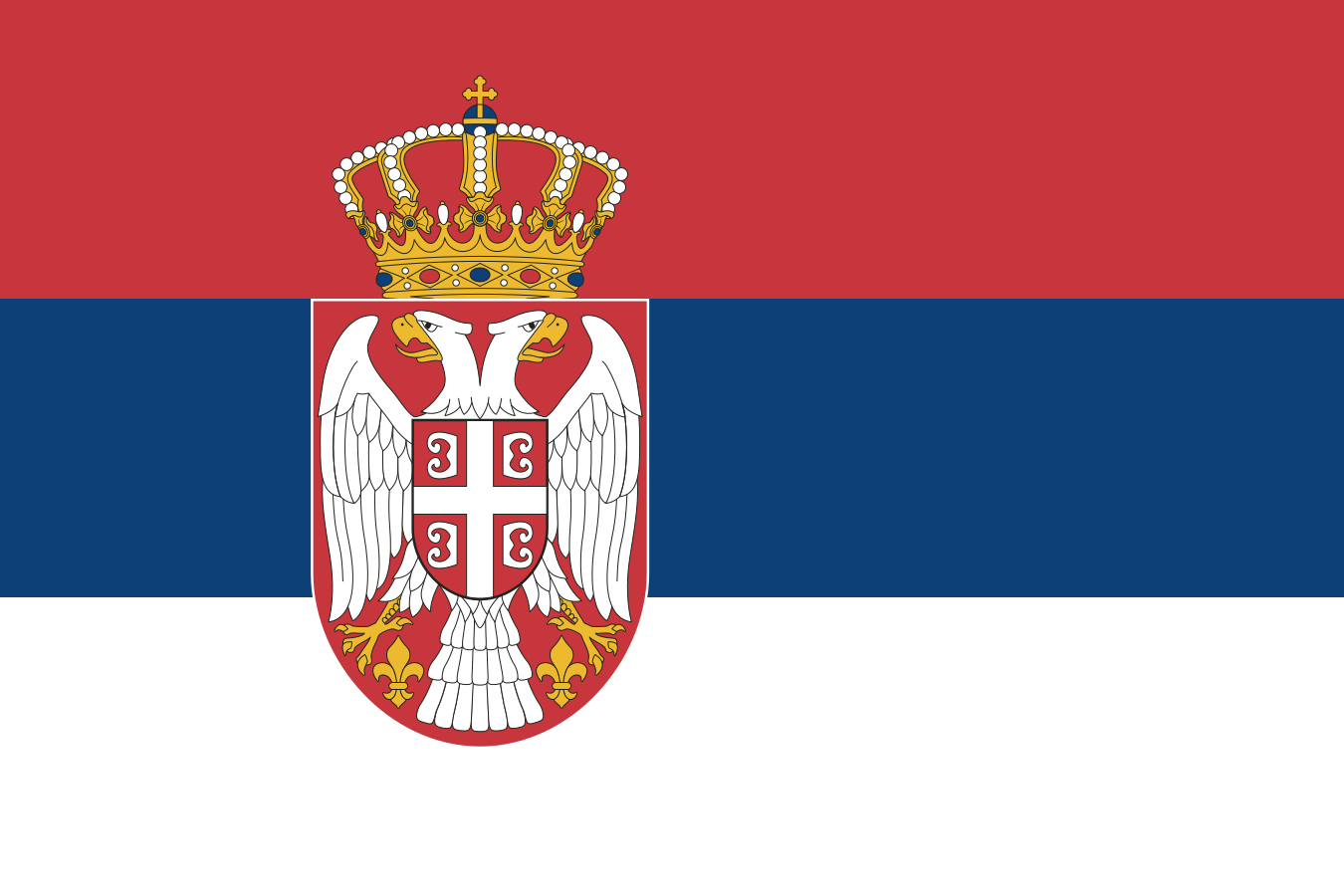 Serbia


