In recent months, Albania has found itself grappling with a deepening crisis rooted in the infiltration of illicit financial flows—primarily stemming from drug trafficking and organized crime—that have profoundly distorted its political landscape and economic stability. The persistent influx of laundered drug money into the country has enriched a small elite while leaving much of the population impoverished and disillusioned. This phenomenon has become so entrenched that many argue Albania requires a fundamental restructuring of its institutions to break free from this cycle of corruption and dependency on criminal networks.
The situation has been exacerbated by the lack of effective governance and law enforcement mechanisms capable of curbing these illegal activities. Over the years, organized crime groups have exploited weak regulatory frameworks and porous borders to channel vast sums of money into Albania. These funds often find their way into real estate, construction, and other sectors, enabling criminals to influence local politicians and public officials. As a result, political decisions increasingly reflect the interests of these powerful few rather than the broader populace. This has led to widespread public frustration and eroded trust in government institutions.
Key players in this complex web include both domestic and international actors. Local mafia clans, some of whom have historical ties to Albanian diaspora communities abroad, operate alongside transnational drug cartels that use Albania as a transit point for narcotics destined for European markets. These criminal enterprises benefit from lax border controls and insufficient coordination between national security agencies. Meanwhile, foreign investors and business entities, sometimes linked to these criminal networks, have further complicated the issue by engaging in dubious financial practices that blur the lines between legitimate commerce and illicit activity.
The roots of this crisis can be traced back decades, when post-communist reforms failed to establish robust anti-corruption measures. Instead, power vacuums created opportunities for organized crime to flourish. In the absence of strong legal deterrents, criminal elements gradually infiltrated state apparatuses, including police forces and judicial systems. This erosion of institutional integrity has made it difficult to combat the ongoing flow of illicit funds effectively.
Recent developments highlight the severity of the problem. Reports indicate that several high-profile individuals, including members of influential political factions, have faced scrutiny over alleged involvement in corrupt practices. While specific details remain under investigation, these cases underscore the extent to which corruption has permeated all levels of society. Public outrage has grown as citizens witness the disparity between the wealthy elite and the struggling masses, fueling demands for systemic change.
Reactions from various stakeholders reveal differing perspectives on how to address the crisis. Civil society organizations and independent journalists have called for urgent reforms, emphasizing the need for stronger transparency laws and more rigorous oversight of financial transactions. Some political leaders acknowledge the gravity of the situation but face challenges in implementing meaningful solutions due to internal divisions and external pressures. International bodies have also expressed concern, urging Albania to take decisive action against organized crime and money laundering.
Looking ahead, the path forward remains uncertain. Experts suggest that comprehensive anti-corruption strategies must be implemented, involving enhanced cooperation between national and international authorities, stricter regulations on financial institutions, and greater civic engagement to hold leaders accountable. Without such efforts, the continued inflow of illicit funds threatens to further destabilize Albania’s already fragile socio-economic environment. The challenge now lies in translating awareness into concrete policy changes that can restore public confidence and ensure sustainable development for all citizens.
2 Berichte
 Balkan Insight (BIRN)UnabhängigLinksgestern
Der Artikel befasst sich mit dem anhaltenden Problem der Drogenkorruption in Albanien und hebt hervor, wie die organisierte Kriminalität illegale Gelder in das Land einführt. Dieser Geldzufluss bereichert eine kleine Gruppe, untergräbt die politische Integrität und verschärft die wirtschaftliche Ungleichheit. Die Situation wird als ein Zyklus beschrieben, in dem kriminelle Netzwerke politische Systeme für finanziellen Gewinn manipulieren und die breite Bevölkerung verarmen lassen.
Tendenz-Einschätzung (Links): Der Artikel beschreibt das Problem als ein systemisches Versagen, das von der organisierten Kriminalität und der Korruption der Eliten angetrieben wird, was mit progressiven Kritiken der Machtstrukturen übereinstimmt.
 N1 SrbijaUnabhängigMittevor 5 Tagen
Nach einem Bericht der Associated Press (AP) wurden sieben Personen verhaftet, darunter fünf Abgeordnete. Einige der Inhaftierten gehörten dem politischen Block des ehemaligen Premierministers Mohammed Shia al-Sadr an. Al-Sadr's Block hatte bei den Parlamentswahlen im November 2023 die meisten Sitze gewonnen, zog sich aber später aus dem Koalitionsrahmen zurück, einer Koalition von iranisch verbündeten schiitischen Parteien, die sie an die Macht brachten, wegen Meinungsverschiedenheiten über den bevorzugten Premierministerkandidaten. Er wurde durch den Geschäftsmann Ali al-Zaidi ersetzt, der von den Vereinigten Staaten Anklagen wegen Korruption und Einflussnahme im Irak erhielt.
Tendenz-Einschätzung (Mitte): Der Artikel präsentiert das Ereignis sachlich, zitiert mehrere Quellen und bietet einen Kontext über die politische Dynamik im Irak. Er zeigt keine klare Voreingenommenheit gegenüber einer Seite und bietet Informationen über die Verhaftungen und die breitere politische Landschaft, ohne offen eine Gruppe gegenüber anderen zu bevorzugen.
★
Halte die Nachrichten ehrlich.
ObjectiveNews ist leserfinanziert und werbefrei – wir zeigen dir den Bias, statt ihn zu verstecken. Unterstütze unabhängigen Journalismus für 5 €/Monat.
Unterstützer werden
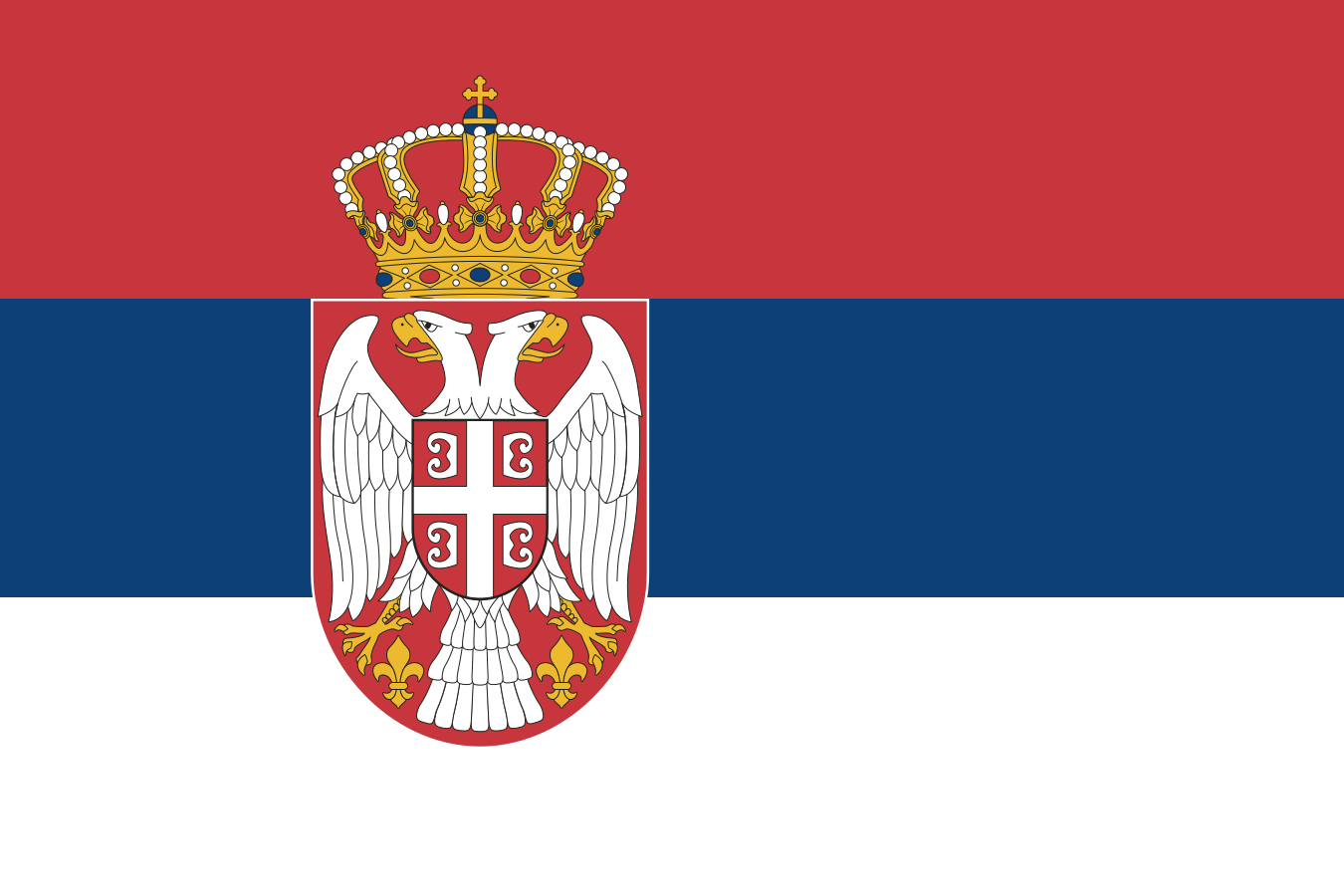 Serbia


