In Serbia, many people believe that a "predbračni ugovor," or prenuptial agreement, exists as a legal document that can regulate property division in case of divorce. However, according to recent information shared by legal experts, this term does not actually appear in Serbian law under its current form. Instead, such agreements are referred to as "bračni ugovor," or marital agreements, which can be concluded before marriage or during its duration. These agreements allow couples to define their financial relationships regarding existing or future assets.
The Family Code defines these agreements as legal documents that enable spouses to arrange their property relations. Such agreements must be formalized in a public notarized document, and if they involve real estate, they must also be recorded in the land registry. This process ensures that the agreement has legal weight and clarity in case of future disputes. The notary plays a crucial role in verifying the authenticity of the agreement and ensuring both parties understand its implications.
According to attorney Dane Žigić, while the term "predbračni ugovor" is commonly used in practice, the official name in Serbian law is "bračni ugovor." He explained that this type of agreement allows couples to decide how their property will be divided in the event of a divorce. It outlines which assets belong to each spouse individually and which are considered joint property. The agreement can be drafted independently by the couple or with the help of a lawyer and must be certified by a notary to gain legal validity.
Žigić emphasized that these agreements are particularly useful when entering into a marriage with specific financial goals or concerns. They provide a clear framework for managing property rights and can prevent potential conflicts after a divorce. However, he noted that no legal document can fully resolve relationship issues that might lead to divorce. Despite this, having a bračni ugovor can significantly reduce the complexity of asset division and ensure that each party's contributions are acknowledged.
Ivan Štibl, founder of the "Ćalac" platform, highlighted the importance of creating a fair system that protects both spouses during the divorce process. He pointed out that divorces often arise from unresolved conflicts within the relationship. Rather than focusing solely on who benefits from the divorce, he argued that the system should aim to ensure neither party suffers undue harm. Štibl stressed that entering into a marriage with the sole intention of gaining financially is inherently flawed and sets the stage for future problems.
Legal experts have observed that situations where one spouse feels entitled to all the assets acquired during the marriage are relatively common. For instance, some men approach lawyers claiming that all the work and sacrifices made during the marriage were theirs alone, including providing for the family, paying bills, and supporting children’s activities. However, Žigić pointed out that behind such claims lies the question of whose responsibilities were taken care of—such as cooking, doing laundry, and caring for the children—while the other spouse was working long hours.
This highlights the assumption in Serbian law that any property acquired during the marriage is considered jointly owned and should be divided equally unless one party can prove a different contribution. This default assumption underscores why bračni ugovor is seen as a valuable tool for couples to clarify their financial expectations and avoid lengthy disputes in the event of a divorce.
Experts emphasize that these agreements are not exclusive to wealthy individuals or celebrities but serve as essential instruments for anyone seeking to manage their financial affairs transparently. Whether or not a bračni ugovor exists, the legal system assumes equal division of property acquired during the marriage. Therefore, couples considering marriage are encouraged to explore the option of drafting a bračni ugovor to better protect their interests and ensure a smoother transition in case of separation.
★
Keep the news honest.
ObjectiveNews is reader-funded and ad-free — we show you the bias instead of hiding it. Support independent journalism for €5/month.
Become a Supporter
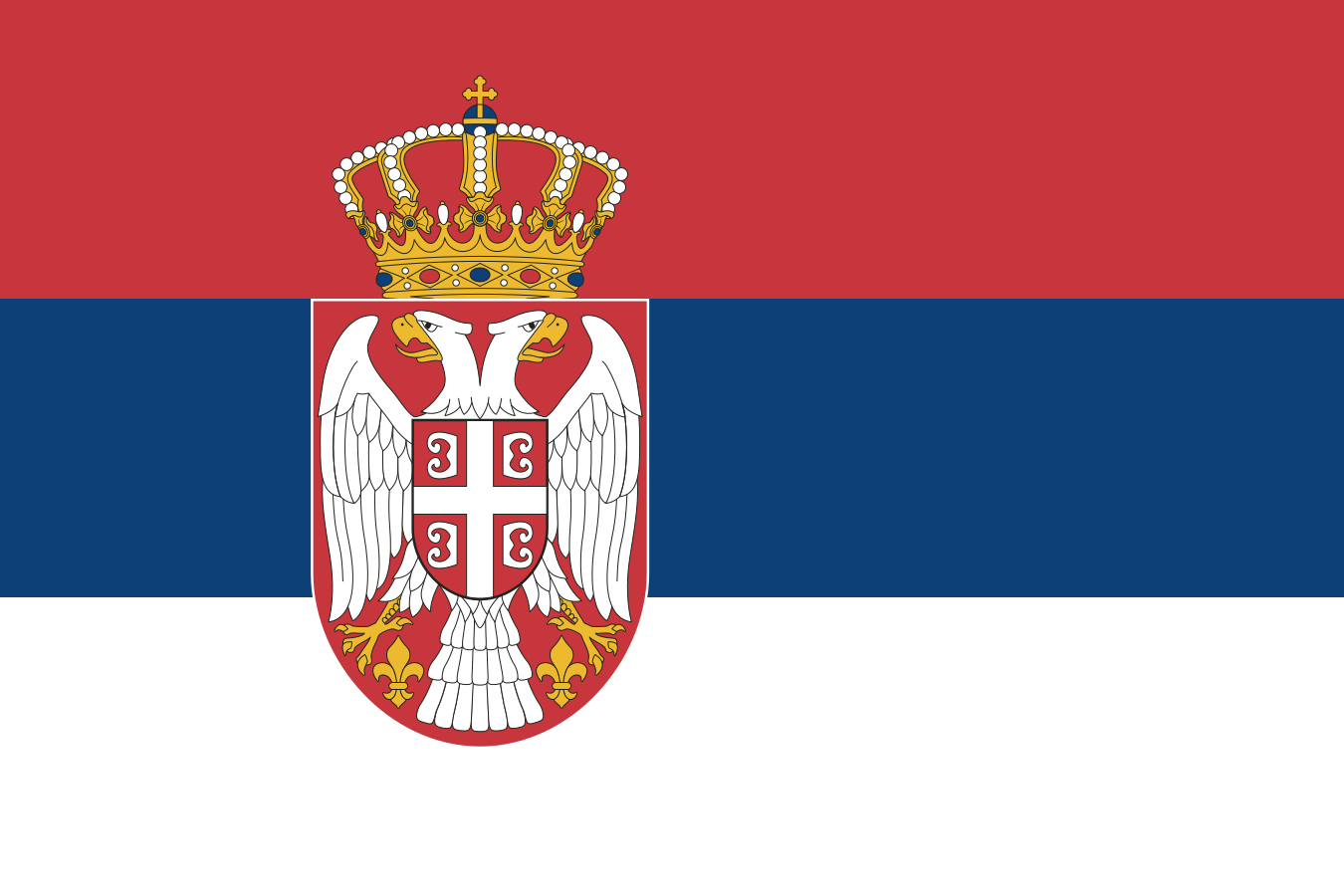 Serbia


