
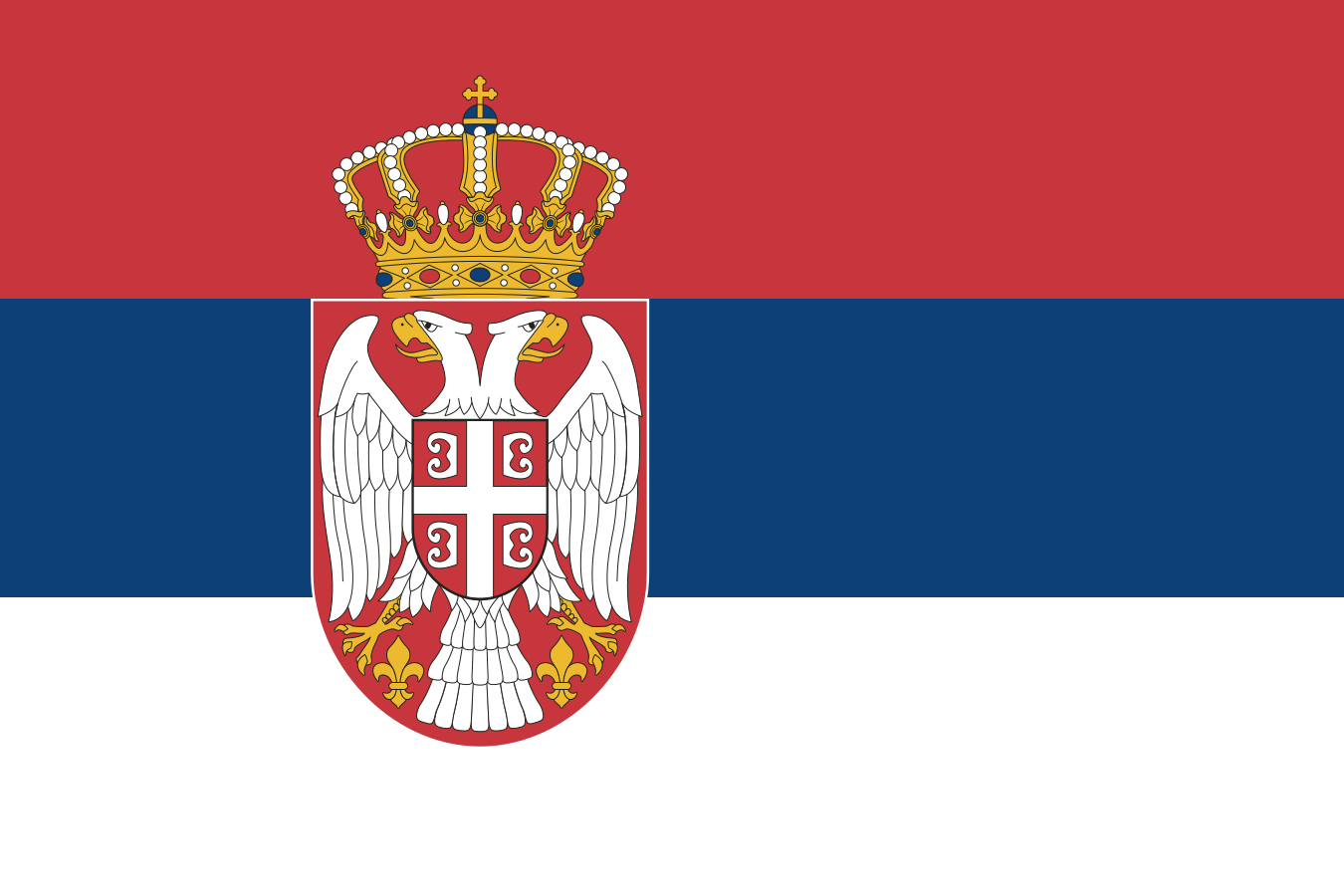
 Serbia
The article explains the difference between domestic extradition requests and Interpol's international arrest warrants, highlighting their distinct legal and operational mechanisms. It describes how Interpol's system has proven effective in locating fugitives, especially those involved in organized crime, through various colored alerts such as red, blue, green, yellow, orange, purple, and silver. The piece notes that criminals often evade capture by undergoing plastic surgery, using fake documents, and seeking refuge in countries like Latin America and Spain. It emphasizes the extreme isolation required for survival among fugitives and the role of international police cooperation, citing a recent successful operation in Montenegro where a Serbian citizen was located and arrested within 24 hours after an Interpol red notice was issued.
Bias read (Center): While the article discusses organized crime and international law enforcement cooperation, which could be seen as politically sensitive, it presents information objectively without overtly favoring any particular political stance. The focus is on explaining legal processes and operational methods,而非
Why these scores (Factual 85 · Objective 75): The article provides an informative explanation of Interpol's different types of wanted notices, citing a criminologist as a source. It accurately describes the color-coded system and their purposes. However, it lacks specific details on recent cases or data supporting the effectiveness claims. The


