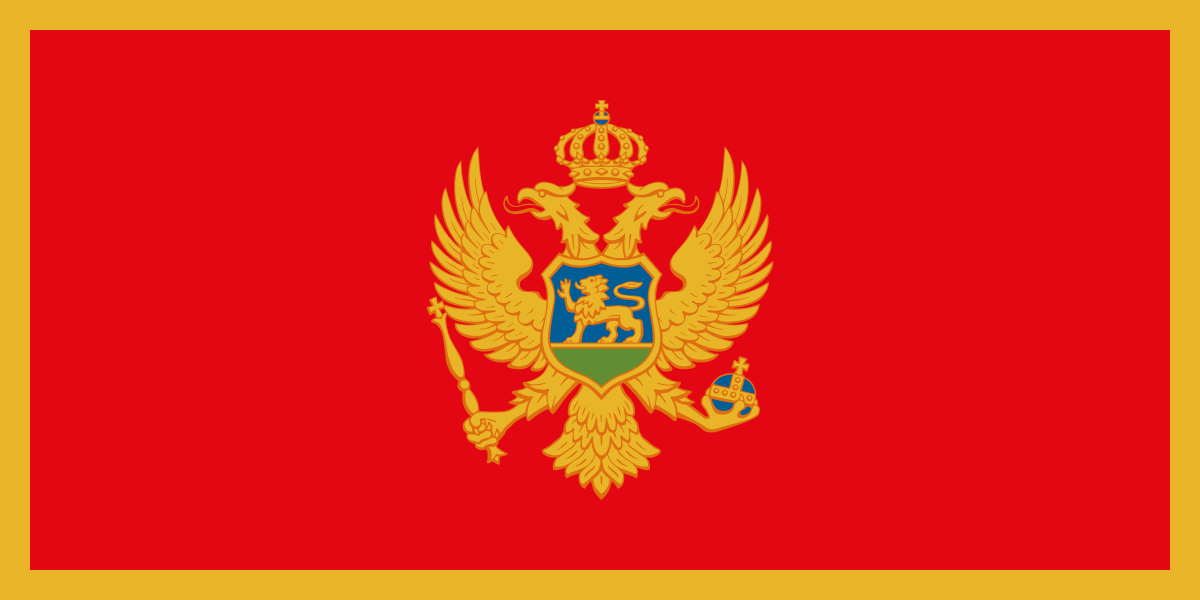
A new controversy has erupted in Montenegro as political leaders have reportedly agreed on constitutional amendments that would remove the status of the Serbian language from the country's constitution. The proposed changes, which have sparked significant debate, involve prominent figures such as Milojko Spajić, Milo Đukanović, and Andrija Mandić. These amendments, according to reports, were influenced by the European Union’s ambassador to Montenegro, Johan Satler, who allegedly instructed them to exclude the Serbian language from the constitution. This move has been seen by some as a further marginalization of the Serbian linguistic and cultural presence in Montenegro.
The constitutional changes under discussion aim to redefine the official languages of Montenegro. Currently, both Montenegrin and Serbian are recognized as official languages. However, the proposed amendments seek to eliminate the mention of the Serbian language in the constitution, effectively reducing its legal standing within the state. According to media reports, these discussions took place during consultations between representatives of the government and opposition parties, facilitated by the EU Delegation in Montenegro. The first vote on these amendments is scheduled for Tuesday, requiring a two-thirds majority to pass.
The only party explicitly stated to oppose these changes is the Democratic People's Party (DNP), led by Milan Knežević. This stance highlights a growing divide among political actors regarding the role of minority languages in the nation's identity and governance. The DNP's position underscores concerns about the potential erosion of cultural diversity and the rights of ethnic minorities within Montenegro.
The proposed constitutional amendments come amid broader efforts to address internal affairs and national security procedures. The EU Delegation emphasized the importance of dialogue in resolving the parliamentary crisis and advancing Europe's integration process. In their statement, they noted that participants in the meeting agreed to initiate changes to laws related to internal matters and national security, including procedures for education. While these reforms are framed as necessary steps towards modernizing governance structures, critics argue that they could undermine the multicultural fabric of Montenegro.
The influence of the European Union in shaping Montenegro's legislative agenda has become increasingly apparent. Ambassador Johan Satler's alleged directive to exclude the Serbian language from the constitution suggests a strategic alignment with EU norms and policies. This raises questions about the extent to which external pressures shape domestic legislation and whether such decisions reflect genuine consensus among Montenegrin citizens or are driven by geopolitical considerations.
Reactions to the proposed amendments have varied widely. Supporters argue that the changes will streamline administrative processes and align Montenegro more closely with EU standards. They view the removal of the Serbian language from the constitution as a step toward consolidating national unity and promoting a singular national identity. Conversely, opponents warn that this move risks alienating the Serbian community, potentially leading to social unrest and a decline in interethnic cooperation.
As the debate over the constitutional amendments continues, attention turns to the upcoming vote. With the DNP opposing the changes and other parties likely to support them, the outcome remains uncertain. If passed, the amendments would mark a significant shift in Montenegro's legal framework, affecting how the country recognizes and protects linguistic diversity. The situation also highlights the complex interplay between national sovereignty, international relations, and the preservation of cultural heritage in contemporary politics. What comes next will depend largely on the political dynamics within Montenegro and the responses of both local and international stakeholders.
2 Berichte
 KurirParteinahRechtsFaktentreue 0Objektivität 0vor 5 Std.
Der Artikel berichtet über vorgeschlagene Verfassungsänderungen in Montenegro, die den Status der serbischen Sprache aus der Verfassung entfernen würden. Die Änderungen werden angeblich von Persönlichkeiten wie Milojko Spajić, Milo Đukanović und Andrija Mandić unterstützt, wobei der Botschafter der Europäischen Union, Johan Satler, angeblich die Entscheidung beeinflusst hat. Laut dem Bericht ist die einzige politische Partei, die sich gegen diese Änderungen ausspricht, die Demokratische Volkspartei (DNP) unter der Leitung von Milan Knežević. Konsultationen zwischen Regierungsvertretern und Oppositionsmitgliedern fanden unter der Schirmherrschaft der EU-Delegation statt, und die erste Abstimmung über die Änderungen ist für Dienstag geplant, die eine Zweidrittelmehrheit erfordert. Die EU-Delegation erklärte, dass sich die Diskussionen auf die Lösung der parlamentarischen Krise und die Förderung der europäischen Integration, einschließlich Reformen in den Bereichen innere Angelegenheiten und nationale Sicherheit, konzentrierten.
Tendenz-Einschätzung (Rechts): Der Artikel verwendet eine emotional geladene Sprache ("podla igra", "nema mesta za bilo šta srpsko") und fasst die Verfassungsänderungen als einen Angriff auf die serbische Identität dar, was auf eine böswillige Absicht derjenigen hindeutet, die die Reformen vorantreiben.
Warum diese Bewertungen (Faktentreue 0 · Objektivität 0): This article is completely unrelated to the primary source document about the family drama involving Era Ojdanić's grandson. It discusses a different political issue in Montenegro, making it irrelevant to the event being assessed.
 Večernje novostiParteinahRechtsFaktentreue 0Objektivität 0vor 5 Std.
Der Artikel berichtet, dass Milojo Spajić, Milo Đukanović und Andrija Mandić zugestimmt haben, die Verfassung von Montenegro zu ändern, um die serbische Sprache auszuschließen. Die Änderungen wurden angeblich durch den EU-Botschafter in Montenegro, Satler, erleichtert, der sie angewiesen hat, jeden Platz für die serbische Sprache in der Verfassung zu entfernen. Die Demokratische Nationalpartei (DNP), angeführt von Milan Knežević, ist die einzige Partei, die sich gegen diese Verfassungsänderungen ausspricht.
Tendenz-Einschätzung (Rechts): Der Artikel beschreibt die Streichung der serbischen Sprache aus der Verfassung Montenegros als eine absichtliche Entscheidung, die vom EU-Botschafter unterstützt wurde und eine koordinierte Anstrengung zur Marginalisierung der serbischen Identität impliziert.
Warum diese Bewertungen (Faktentreue 0 · Objektivität 0): This article also covers a separate political scandal in Montenegro, not related to the family drama described in the primary source. It lacks connection to the actual event being evaluated.
★
Halte die Nachrichten ehrlich.
ObjectiveNews ist leserfinanziert und werbefrei – wir zeigen dir den Bias, statt ihn zu verstecken. Unterstütze unabhängigen Journalismus für 5 €/Monat.
Unterstützer werden
 Serbia